A pot of ratatouille brings together tender vegetables, rich tomato flavor, and the kind of comfort that makes everyone linger a little longer at the table. Made with simple ingredients and a straightforward cooking process, it’s a wonderful way to turn everyday produce into something special. Whether you’re serving it for a cozy family supper or sharing it with friends, this colorful vegetable stew always feels like a celebration of good food and good company.
Why You’ll Love This Ratatouille (Provençal Vegetable Stew)
- Loaded with Vegetables: Summer squash, eggplant, peppers, onions, garlic, and tomatoes come together in every hearty spoonful.
- Rich Layered Flavor: Cooking each vegetable separately helps build depth and allows every ingredient to contribute its own character.
- Flexible Serving Options: Enjoy it hot, slightly chilled, reheated, or at room temperature depending on the occasion.
- Beautiful Presentation: The colorful mix of vegetables creates a dish that’s just as appealing to look at as it is to eat.
- Perfect for Sharing: With a yield of about 2 quarts, it’s ideal for family meals and casual gatherings.
- Simple Pantry-Friendly Ingredients: Most of the ingredients are easy to find and work together to create impressive results.
- Make-Ahead Friendly: The stew can be chilled after cooking, making it convenient for planning meals ahead of time.
Ingredients You’ll Need
One of the things I love most about this dish is how a handful of humble vegetables transform into something truly memorable. While the ingredient list is simple, every item has an important role in creating the rich texture and balanced flavor that make ratatouille such a favorite among fans of mediterranean diet recipes.
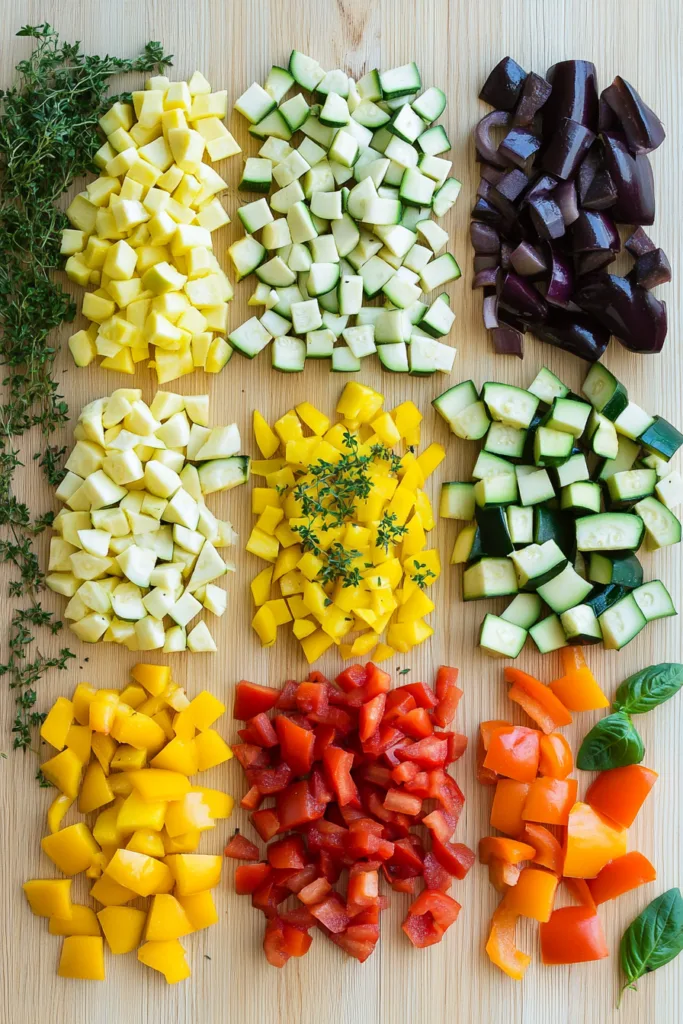
- 3 cups 1/4-inch diced summer squash (zucchini and yellow squash): These vegetables add tenderness and a delicate flavor to the stew. The measured amount ensures they remain balanced with the other vegetables. If desired, you can use all zucchini or all yellow squash while keeping the same total quantity.
- 3 cups 1/4-inch diced Italian eggplant: Eggplant contributes body and helps create the stew’s satisfying texture. Using the specified amount keeps it from overpowering the other vegetables. Italian eggplant is preferred because of its mild flavor and tender flesh.
- Kosher salt: Salt is used throughout the recipe to season the vegetables and help draw excess moisture from the squash and eggplant during draining.
- Freshly ground black pepper: Pepper adds gentle warmth and enhances the overall flavor of the finished stew.
- 3/4 cup (12 tablespoons) extra-virgin olive oil, divided, plus more as needed: Olive oil is used during each stage of cooking to help soften the vegetables and bring the ingredients together. Dividing the oil across the cooking process ensures even flavor development and proper texture.
- 3 cups 1/4-inch diced yellow onion: Onion creates the savory foundation of the dish. The quantity provides enough sweetness and depth to support all the other vegetables without dominating them.
- 6 medium cloves garlic, minced (about 2 tablespoons): Garlic adds aromatic flavor and complexity. The amount is enough to be noticeable while remaining balanced with the tomatoes and vegetables.
- 3 cups 1/4-inch diced red and yellow bell pepper: Bell peppers bring sweetness, color, and texture. Using both red and yellow peppers creates a vibrant appearance and a balanced flavor profile.
- 2 cups puréed canned whole tomatoes with their juices: Tomato purée forms the sauce that coats the vegetables. The quantity creates a thick, rich consistency while allowing the vegetables to remain the star of the dish. Cooked fresh tomato purée may be used if available.
- 1 bouquet garni made from fresh herbs such as thyme, parsley, and basil: The herb bundle infuses the stew with gentle herbal notes while remaining easy to remove before serving. Optional additions mentioned in the notes include oregano, marjoram, and savory.
- Chopped fresh parsley leaves and tender stems, for garnish (optional): Parsley adds a fresh finishing touch and a pop of color right before serving.
The beauty of this ingredient list is that every vegetable gets its own moment to shine. By treating each one with a little care before they come together in the pot, you end up with a stew that feels hearty, colorful, and wonderfully balanced from the first bite to the last.
How to Make Ratatouille (Provençal Vegetable Stew)
This is the kind of recipe that rewards a little patience. I love how each vegetable gets its own turn in the skillet before everything comes together in one beautiful pot. That extra attention helps create a stew where every ingredient keeps its personality while still becoming part of something bigger.
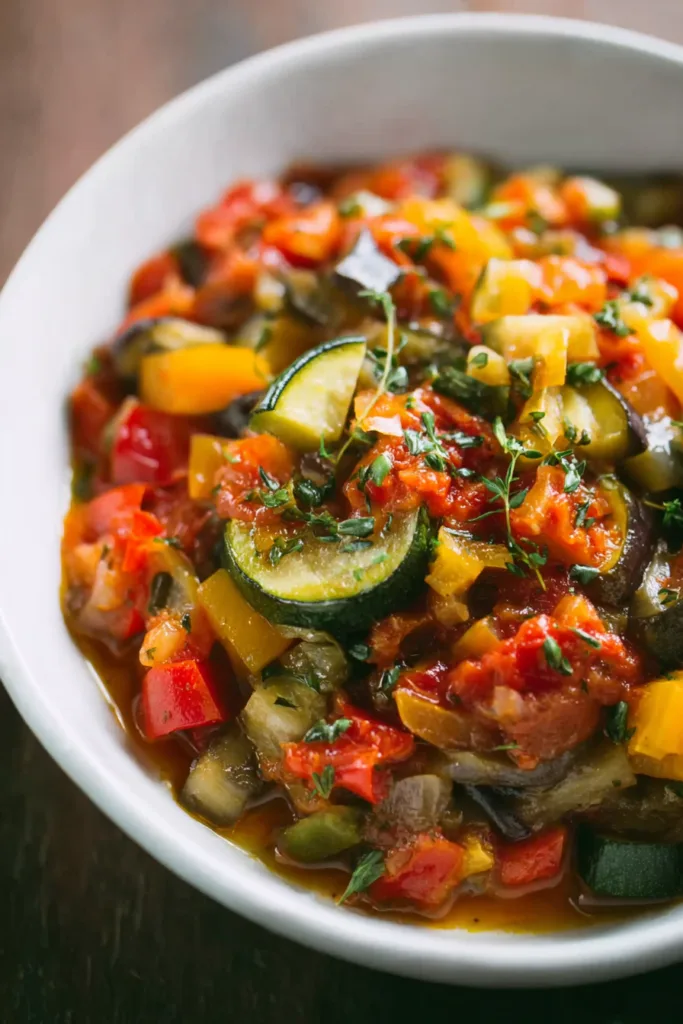
- Drain the summer squash and eggplant separately by placing each in a wire mesh strainer set over a bowl. Toss generously with kosher salt and allow them to stand for at least 15 minutes and up to 1 hour. Discard any liquid collected in the bowls.
- Cook the onion and garlic in 3 tablespoons of olive oil over medium-high heat, seasoning with salt as they soften. Transfer them to a rimmed baking sheet in an even layer to cool briefly, then move them into a large pot.
- Cook the bell peppers in another 3 tablespoons of olive oil, seasoning with salt and stirring until softened. Spread them on the baking sheet to cool for a few minutes before transferring them to the pot with the onion and garlic.
- Cook the summer squash in 3 tablespoons of olive oil until softened. Spread it on the baking sheet to cool briefly, then add it to the pot with the other vegetables. Repeat the process with the eggplant using the remaining olive oil, adding more oil if needed, then transfer it to the pot and stir the vegetables together.
- Combine the vegetables with the tomato purée and bouquet garni in the pot over medium-high heat. Once the mixture is gently bubbling, lower the heat to medium and continue cooking while stirring until the tomato purée coats the vegetables in a thick sauce.
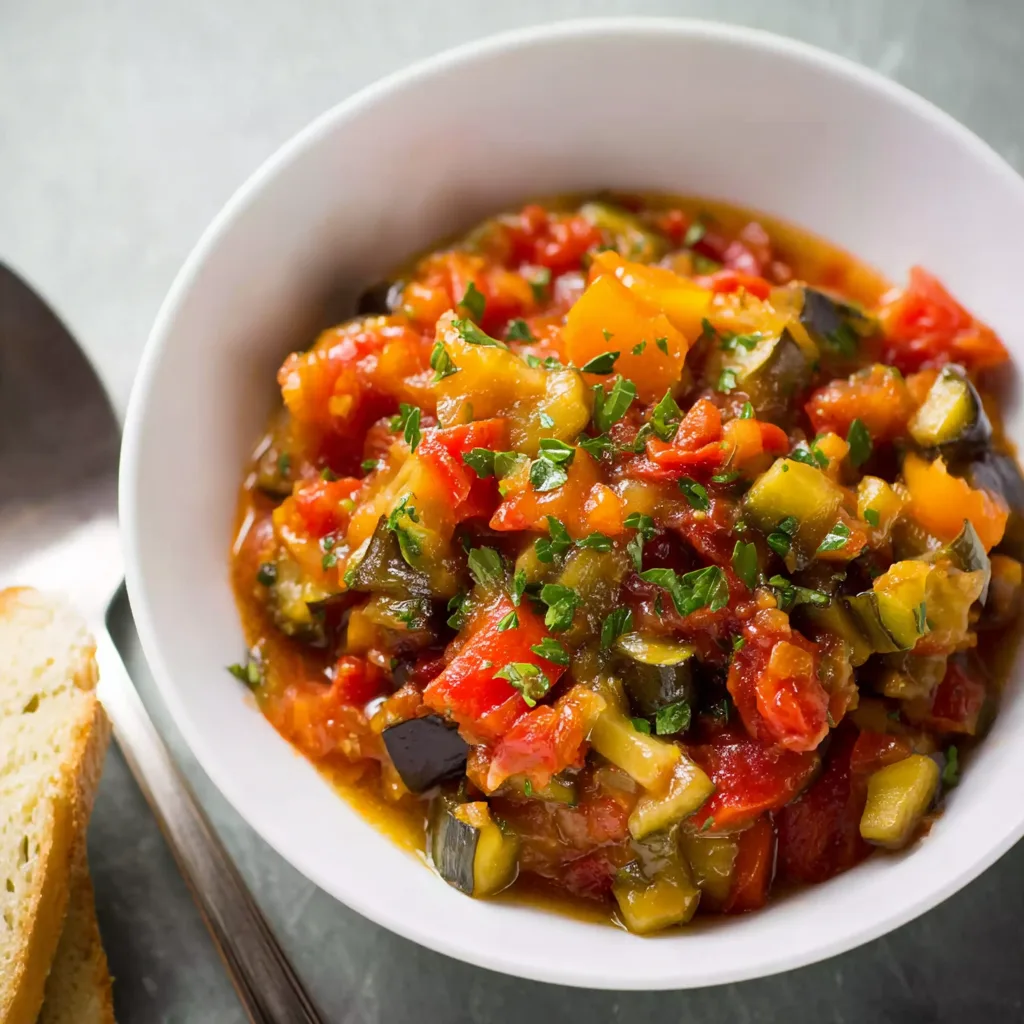
- Finish by removing and discarding the herb bundle. Season with salt, stir in chopped parsley if using, and drizzle with a small amount of fresh extra-virgin olive oil before serving. Enjoy it immediately or chill and serve reheated, slightly chilled, or at room temperature.
Tips for the Best Ratatouille (Provençal Vegetable Stew)
- Don’t Skip the Draining Step — Allowing the squash and eggplant to drain helps remove excess liquid before cooking.
- Cook Vegetables Separately — Preparing each vegetable in its own batch helps maintain its individual texture and flavor contribution.
- Use the Cooling Step — Briefly cooling the vegetables on the baking sheet before combining them follows the method exactly and helps keep the process organized.
- Watch the Tomato Sauce — Continue cooking until the tomato purée coats the vegetables in a thick sauce rather than stopping as soon as it starts bubbling.
- Remove the Herb Bundle Before Serving — The bouquet garni is meant to flavor the stew during cooking and should be discarded before serving.
- Finish with Fresh Olive Oil — A small drizzle at the end adds a final layer of richness that complements this favorite among easy mediterranean diet recipes.
Storage & Make-Ahead Tips
Fridge: Store cooled ratatouille in an airtight container in the refrigerator for up to 3 to 4 days. Reheat gently before serving or enjoy it slightly chilled if preferred.
Freezer: Transfer completely cooled ratatouille to freezer-safe containers and freeze for up to 3 months. Thaw in the refrigerator before reheating.
Make-Ahead: This dish can be prepared in advance and chilled after cooking. Serve it reheated, slightly chilled, or at room temperature depending on your preference.
What to Serve With Ratatouille (Provençal Vegetable Stew)
This colorful stew pairs beautifully with a variety of simple side dishes. Since the vegetables and tomato sauce already bring plenty of flavor to the table, I like serving it alongside uncomplicated favorites that let the ratatouille remain the star.
- Crusty bread for soaking up the sauce
- Steamed rice
- Simple green salad
- Roasted vegetables
- Cooked grains
- Fresh seasonal fruit for dessert
There’s something downright special about gathering around a table with a big pot of vegetables that have been cooked with care. Every spoonful feels hearty, colorful, and welcoming—the kind of dish that reminds us how much joy can come from simple ingredients.
Frequently Asked Questions
Q: Why are the squash and eggplant salted before cooking?
Salting the squash and eggplant allows excess moisture to drain away before they go into the skillet. According to the recipe method, both vegetables rest in separate strainers over bowls, and any collected liquid is discarded. This step helps prepare the vegetables for cooking and is an important part of the overall process.
Q: Can I use only zucchini or only yellow squash?
Yes. The recipe specifies summer squash such as zucchini and yellow squash, which means either can be used as long as the total quantity remains the same. Using one variety instead of a combination may slightly change the appearance, but the cooking method remains exactly the same.
Q: Why are the vegetables cooked separately?
Each vegetable has its own cooking time and texture. The recipe intentionally cooks onions, peppers, squash, and eggplant in separate batches before combining them in the pot. This method allows each ingredient to soften properly before being added to the finished stew.
Q: Can I use fresh tomatoes instead of canned tomato purée?
Yes. The recipe notes explain that cooked fresh tomatoes can be puréed and used in place of canned tomatoes if they are of good quality. You may also peel, seed, and dice fresh tomatoes. The notes mention that diced fresh tomatoes will hold their shape more and provide a more subdued flavor in the finished dish.
Q: What herbs can be used in the bouquet garni?
The recipe suggests fresh thyme, parsley, and basil, but the notes also mention oregano, marjoram, and savory as suitable options. The herbs are tied together and simmered with the vegetables before being removed prior to serving.
Q: Can ratatouille be served cold?
Yes. One of the wonderful things about this recipe is its flexibility. The finished stew may be served immediately after cooking, reheated later, slightly chilled, or even at room temperature. The recipe specifically includes all of these serving options.
Q: Can I speed up the cooking process?
According to the recipe notes, you can prepare the vegetables more quickly by cooking them individually in multiple skillets at the same time. Once each vegetable is cooked, transfer everything to the pot and complete the final cooking stage together.
Q: Does this work for mediterranean dinner recipes?
Absolutely. With its combination of vegetables, olive oil, tomatoes, and fresh herbs, this stew fits naturally into a variety of meal occasions. It can be served as a main vegetable dish or as part of a larger spread, making it a versatile option for gatherings and family meals alike.
Ratatouille (Provençal Vegetable Stew)
Ingredients
Method
- Place the summer squash in a wire mesh strainer over a bowl and the eggplant in a second wire mesh strainer over another bowl. Toss both generously with kosher salt and let drain for at least 15 minutes and up to 1 hour. Discard any collected liquid.
- Heat 3 tablespoons olive oil in a large skillet over medium-high heat. Add onion and garlic, season with salt, and cook until softened, about 6 minutes.
- Transfer the onion and garlic to a rimmed baking sheet in an even layer and cool for 3 minutes. Move them to a large pot.
- Add 3 more tablespoons olive oil to the skillet. Add bell pepper, season with salt, and cook until softened, about 7 minutes.
- Transfer the bell pepper to the baking sheet to cool for 3 minutes, then add it to the pot with the onion and garlic.
- Add 3 more tablespoons olive oil to the skillet. Add the summer squash and cook until softened, about 4 minutes.
- Transfer the squash to the baking sheet to cool for 3 minutes, then add it to the pot.
- Add the remaining 3 tablespoons olive oil to the skillet. Add eggplant and cook until softened, about 4 minutes, adding more olive oil if needed.
- Transfer the eggplant to the pot with the other vegetables and stir to combine.
- Place the pot over medium-high heat. Stir in the tomato purée and bouquet garni.
- Bring the mixture to a gentle bubble, then reduce the heat to medium and cook, stirring, until the tomato purée coats the vegetables in a thick sauce, about 15 minutes.
- Discard the herb bundle. Season with salt, stir in chopped parsley if using, and drizzle with a small amount of fresh extra-virgin olive oil before serving.