Big, beautiful platters of steaming couscous piled high with tender vegetables and rich broth have a way of bringing everybody straight to the table. This traditional Couscous with Seven Vegetables is hearty, deeply comforting, and absolutely worth every step. Whether you’re cooking for Sunday supper, a holiday gathering, or just feeding a hungry crowd, this dish turns an ordinary meal into something truly special.
Why You’ll Love This Couscous with Seven Vegetables
- Deeply comforting: The slow-simmered broth, fluffy steamed couscous, and tender vegetables create a meal that feels rich, cozy, and satisfying from the very first bite.
- Made for sharing: This recipe yields a generous serving platter that’s perfect for family dinners, celebrations, and gathering everybody around the table.
- Layered texture: Every steaming step helps create couscous that’s light and fluffy instead of heavy or packed together.
- Loaded with vegetables: Cabbage, carrots, zucchini, squash, turnips, onions, and tomatoes all cook together in the broth for incredible flavor.
- Flexible protein options: Lamb, beef, goat, or chicken all work beautifully depending on what you have on hand.
- Traditional cooking method: Steaming the couscous in stages gives the grains their signature texture and authentic finish.
- Extra flavorful broth: The seasoned broth is rich enough to spoon over every serving and still offer extra on the side.
Ingredients You’ll Need
This Couscous with Seven Vegetables uses simple ingredients that slowly build layers of flavor while everything cooks together in the couscoussier. The combination of vegetables, warm spices, and broth creates one of those unforgettable mediterranean dinner recipes that feels both rustic and celebratory at the same time.
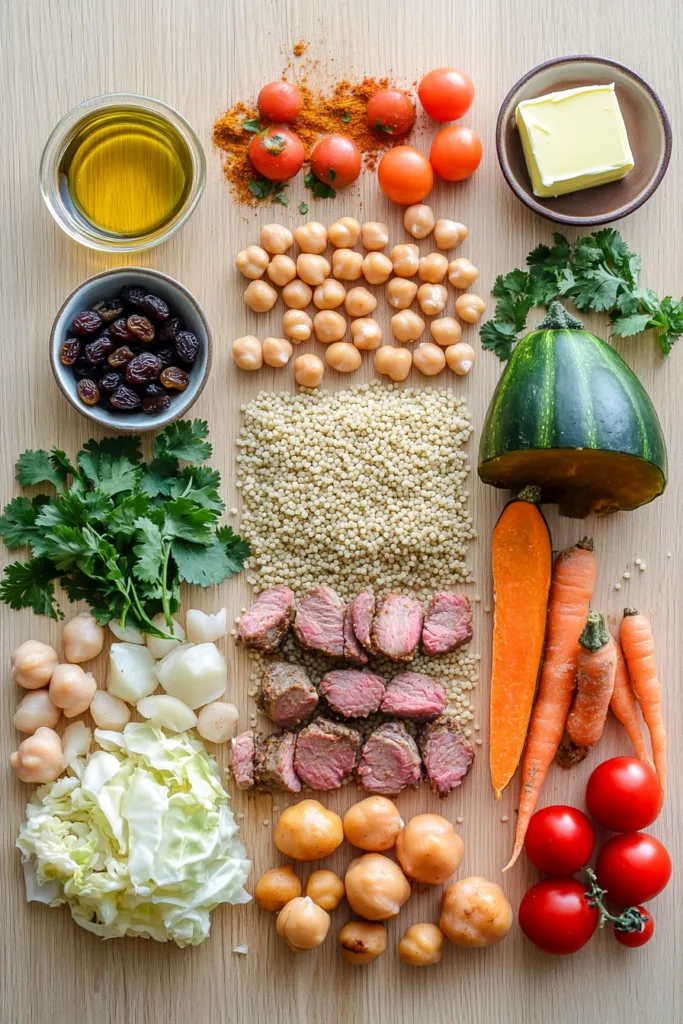
- 2.2 lb. couscous: Medium couscous holds up beautifully during multiple steamings and becomes light and fluffy without turning mushy. Non-instant couscous is important here because it’s designed for steaming.
- 1/4 cup olive oil or vegetable oil: The oil coats the couscous grains during steaming so they stay separate instead of clumping together.
- 6 cups water, divided: Water hydrates the couscous gradually throughout the steaming process. Milk can be used during the final steaming for a richer finish.
- 2 to 3 teaspoons salt: Salt is added after the first steaming so the couscous absorbs seasoning evenly.
- 2 tablespoons soft butter: Butter gets worked into the finished couscous to give it richness and softness.
- 2.2 lb. lamb, beef, or goat meat: Bone-in meat gives the broth depth and richness while slowly becoming tender during cooking. A whole chicken can also be used.
- 1 large onion: Coarsely chopped onion helps form the flavorful base of the broth.
- 3 fresh tomatoes: Peeled tomatoes cook down into the sauce and add body and natural sweetness.
- 1/4 cup olive oil or vegetable oil: This second portion of oil helps brown the meat and build the broth.
- 1 1/2 tablespoons salt: Seasons the broth and vegetables thoroughly from the beginning.
- 1 tablespoon ginger: Ginger adds warmth and gentle spice to the broth.
- 1 tablespoon pepper: Pepper gives the broth a bold, savory backbone.
- 1 teaspoon turmeric: Turmeric adds earthy flavor and beautiful color to the broth.
- 1 handful parsley and cilantro sprigs: Tied into a bouquet, the herbs infuse the broth while staying easy to remove later.
- 2 teaspoons smen: Preserved butter adds traditional richness to the broth near the end of cooking. It’s optional but deeply flavorful.
- 1/2 cup dried chickpeas: Soaked chickpeas become tender while adding heartiness and texture to the finished platter.
- 1 small head cabbage: Cabbage absorbs the broth beautifully while becoming soft and flavorful.
- 3 or 4 medium turnips: Turnips add earthy flavor and balance the richness of the broth.
- 8 to 10 carrots: Carrots bring sweetness and hold their shape nicely during the long simmer.
- 1 or 2 small tomatoes: Quartered tomatoes soften into the vegetables and add extra moisture.
- 1 or 2 small onions: These onions cook directly with the vegetables and become incredibly tender.
- 1 small acorn squash: Squash adds sweetness and a soft texture that pairs beautifully with the broth.
- 4 or 5 small zucchini: Zucchini cooks until tender while soaking up all the seasoning from the broth.
- 2 or 3 chili peppers or jalapeños: These optional peppers add heat and can be simmered separately in broth until tender.
- 1 cup fresh or frozen fava beans: Fava beans add extra texture and are added during the second steaming if using.
- 2 or 3 sweet potatoes: Sweet potatoes add hearty sweetness and richness to the vegetable mixture.
- 1 bottle gourd: Bottle gourd becomes wonderfully soft and delicate during cooking.
- 1/2 cup raisins: Raisins are used in the optional tfaya topping and become plump and sweet after soaking.
- 2 or 3 large onions: These onions slowly cook down into the tfaya garnish.
- 1/2 cup water: Water helps soften the tfaya mixture while it cooks.
- 2 tablespoons butter: Butter gives the tfaya richness and silky texture.
- 2 tablespoons honey: Honey adds sweetness to balance the savory couscous and broth.
- 1/2 teaspoon pepper: Adds mild spice to the tfaya.
- 1/2 teaspoon cinnamon: Cinnamon brings warmth and sweetness to the caramelized onions and raisins.
- 1/4 teaspoon ginger: Ginger adds subtle warmth to the tfaya mixture.
- 1/4 teaspoon turmeric: Gives the tfaya gentle color and earthy flavor.
- 1 pinch saffron threads: Saffron adds delicate flavor and aroma to the garnish.
- 1 pinch salt: Balances the sweetness in the tfaya.
- 1 teaspoon orange flower water: Optional orange flower water adds floral fragrance right at the end.
How to Make Couscous with Seven Vegetables
Now listen—this is the kind of cooking that fills the whole house with excitement long before supper ever hits the table. There’s a rhythm to steaming couscous and building that broth layer by layer, and once you get into it, it feels downright joyful.
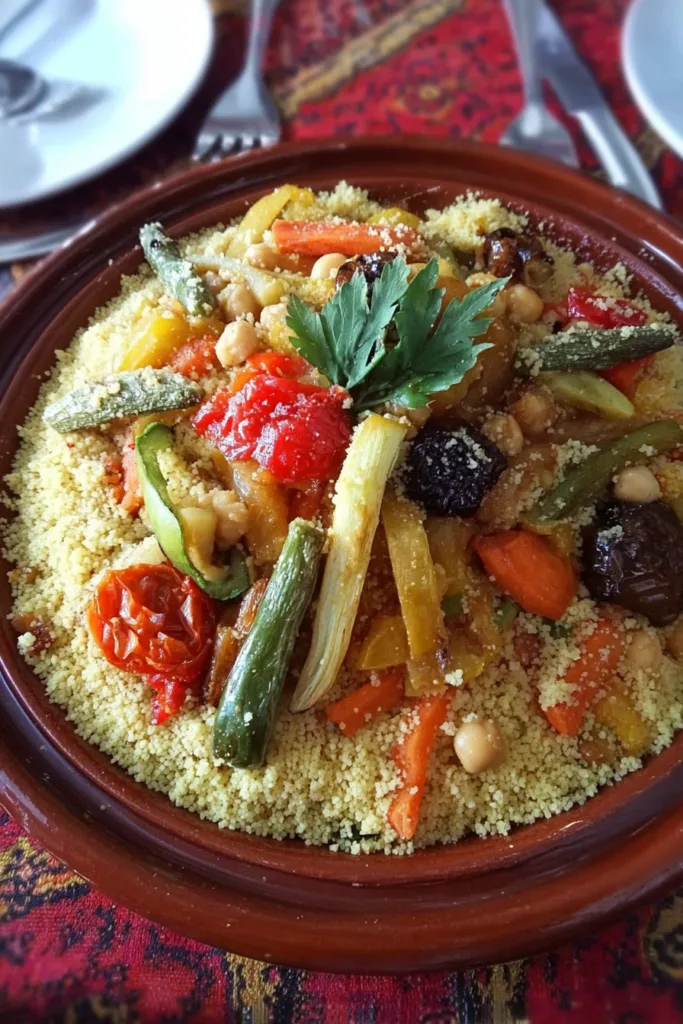
- Prepare the chickpeas and vegetables ahead of time by soaking the dried chickpeas overnight, peeling and cutting the vegetables, and setting up your couscoussier and mixing bowl. If you’re making tfaya, begin simmering the onions, raisins, butter, honey, spices, and water until thick and tender.
- Brown the meat with the oil, chopped onion, tomatoes, salt, ginger, pepper, and turmeric in the base of the couscoussier over medium-high heat. Stir frequently while the mixture cooks down into a thick sauce. Add the soaked chickpeas, parsley and cilantro bouquet, and water, then bring everything to a boil and simmer covered.
- Steam the couscous for the first time by tossing it with oil and water until evenly coated and free of clumps. Transfer it loosely into the lightly oiled steamer basket and place it over the broth. Once steam rises through the couscous, allow it to steam until the grains begin to soften.
- Work more water and salt into the steamed couscous after turning it back into the bowl. Rub and toss the grains between your hands to break apart any clumps before returning the couscous to the steamer basket. Add the cabbage, onions, tomatoes, and fava beans if using to the broth, then steam the couscous again.
- Add the turnips and carrots to the broth while you prepare the couscous for the final steaming. Gradually work additional water or milk into the couscous until the grains are tender but still separate. Add half the couscous to the basket, then place the squash, zucchini, sweet potatoes, and bottle gourd into the broth. Finish by adding the remaining couscous and steaming until light and fluffy.
- Assemble the finished dish by turning the couscous into a large serving platter and working in the butter and a little broth. Arrange the meat in the center, surround it with the vegetables, spoon chickpeas over the top, and drizzle broth generously over everything. Serve extra broth on the side along with tfaya if desired.
Tips for the Best Couscous with Seven Vegetables
- Don’t pack the couscous: Keep the grains loose when transferring them to the steamer basket so the steam can circulate properly.
- Work the grains thoroughly: Tossing and rubbing the couscous between your hands during each steaming step helps prevent clumps and keeps the texture fluffy.
- Taste the broth often: The broth should stay well seasoned throughout cooking since it flavors both the vegetables and couscous.
- Add vegetables in stages: Different vegetables cook at different rates, so staggered cooking keeps everything tender instead of overcooked.
- Use milk for the final steaming: Replacing water with milk during the last steaming creates an especially rich couscous texture.
- Seal escaping steam: If steam leaks between the pot and steamer basket, wrap folded plastic wrap loosely around the rim to help create a tighter seal. This little trick makes a big difference in traditional healthy mediterranean meals like this one.
Storage & Make-Ahead Tips
Fridge: Store leftover couscous, vegetables, and broth in separate airtight containers in the refrigerator for up to 3 to 4 days. The broth helps keep everything moist when reheating.
Freezer: The broth, meat, and vegetables freeze well for up to 3 months. Couscous can also be frozen, though the texture may soften slightly after thawing.
Make-ahead: The vegetables can be washed and cut ahead of time, and the chickpeas can be soaked the night before. Tfaya can also be prepared in advance and gently reheated before serving.
What to Serve With Couscous with Seven Vegetables
This couscous is already a full and hearty meal, but a few simple sides can round out the table beautifully without taking attention away from the main platter.
- Warm flatbread: Perfect for soaking up extra broth.
- Simple green salad: A fresh salad balances the richness of the broth and vegetables.
- Olives and pickled vegetables: Salty, tangy bites pair beautifully with the warm spices.
- Fresh fruit platter: Sweet fruit makes a refreshing contrast after a hearty meal.
- Mint tea: A warm glass alongside the couscous creates a comforting finish to the meal.
- Roasted peppers: Their smoky sweetness pairs nicely with the savory vegetables and broth.
Frequently Asked Questions
Q: Why is couscous steamed multiple times?
Steaming the couscous in stages helps the grains absorb moisture gradually while staying light and separate. Each steaming softens the grains a little more, while the tossing and rubbing between steamings prevents clumping. This traditional method gives couscous its signature fluffy texture.
Q: Can I use instant couscous instead?
Yes, but the texture will be different from traditionally steamed couscous. If using instant couscous, it’s best to reconstitute it with broth from the recipe instead of plain water. Be careful not to overhydrate it because the couscous should stay light and fluffy rather than soft and soggy.
Q: What meat works best in this recipe?
Lamb, beef, and goat all work beautifully because the bones help create a rich broth during the long simmer. Chicken can also be used, though it may cook faster and need to be removed earlier. Each option gives the broth a slightly different flavor while still keeping the dish hearty and satisfying.
Q: Do I have to make the tfaya?
Not at all. The couscous is still complete and delicious without it. Tfaya simply adds a sweet and savory topping made from caramelized onions and raisins that contrasts beautifully with the rich broth and vegetables. Some families love serving it on the side so everyone can add as much or as little as they like.
Q: How do I keep the couscous from clumping?
The key is working the couscous well during each steaming stage. Tossing, rubbing, and separating the grains by hand helps distribute moisture evenly. It’s also important not to compress the couscous in the steamer basket because tightly packed grains won’t steam properly.
Q: Can this be made vegetarian?
Yes. Simply omit the meat or chicken when making the broth. The onions, tomatoes, chickpeas, spices, and vegetables still create a flavorful broth with plenty of richness. Additional olive oil can also be added if you want a fuller-bodied broth for your platter.
Q: Why are the vegetables added at different times?
Different vegetables soften at different rates, so staggering them helps everything finish cooking together. Carrots and turnips need more time than zucchini or squash, while softer vegetables can quickly become too tender if added too early.
Q: Is Couscous with Seven Vegetables good for gatherings?
Absolutely. This recipe makes a large platter that’s perfect for feeding family and friends. Since the broth is served alongside the couscous, guests can customize each serving exactly how they like it. It’s one of those dishes that naturally turns supper into an occasion.
There’s something mighty special about gathering around one giant platter piled high with couscous, vegetables, and rich broth. It’s warm, generous cooking that invites everybody to slow down, scoop up another spoonful, and stay awhile at the table.
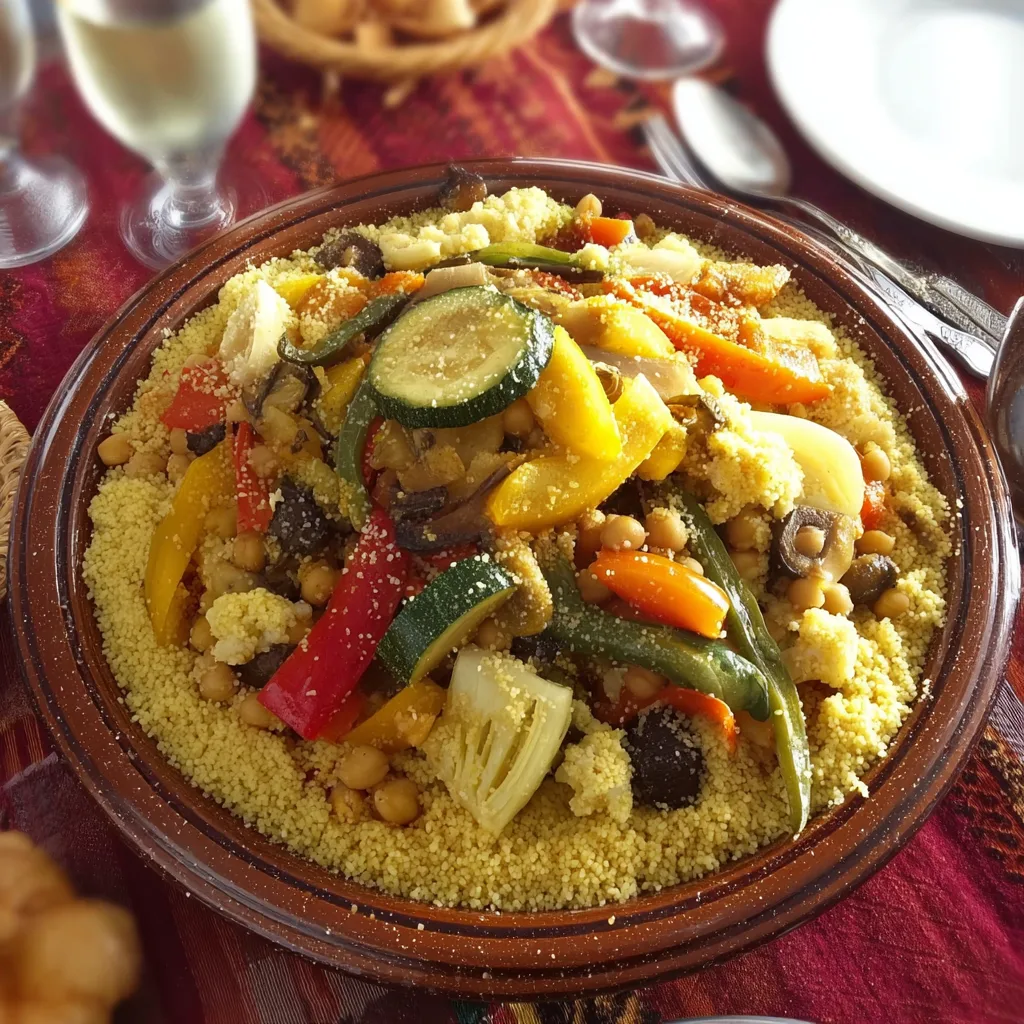
Couscous with Seven Vegetables
Ingredients
Method
- Soak the dried chickpeas in water overnight or use the quick soak method.
- Wash and prepare all vegetables.
- Prepare the optional tfaya by simmering all tfaya ingredients except orange flower water until thick and tender.
- Set up the couscoussier and lightly oil the steamer basket.
- Brown the meat with oil, onion, tomatoes, and spices in the base of the couscoussier.
- Add soaked chickpeas, parsley and cilantro bouquet, and water to the pot.
- Bring the broth to a boil, cover, and cook over medium heat.
- Toss the couscous with oil and 1 cup water until evenly coated and free of clumps.
- Transfer the couscous to the steamer basket and steam until steam rises through the couscous.
- Turn the couscous into a large bowl and work in water and salt while separating the grains.
- Return the couscous to the steamer basket.
- Add cabbage, onions, tomatoes, and optional fava beans to the broth.
- Steam the couscous again until steam rises through the grains.
- Turn the couscous back into the bowl.
- Add turnips and carrots to the broth and continue cooking.
- Gradually work additional water or milk into the couscous until al dente.
- Taste the couscous and adjust salt if needed.
- Transfer half the couscous to the steamer basket.
- Add squash, zucchini, sweet potatoes, and bottle gourd to the broth.
- Add remaining couscous to the basket and steam until light and fluffy.
- Turn the couscous into a serving bowl and work in butter.
- Add smen to the broth and stir to combine.
- Work some broth into the couscous.
- Arrange the couscous on a serving platter with meat and vegetables on top.
- Drizzle broth over the couscous and serve remaining broth on the side.
- Add orange flower water to the tfaya if desired and serve warm.