Tender, smoky, and bright with fresh lemon, this grilled octopus is the kind of dish that turns an ordinary meal into something special. With just a handful of simple ingredients and a straightforward cooking method, it’s surprisingly approachable for home cooks. Whether you’re serving it for a relaxed family dinner or sharing it with friends on a warm evening, this recipe brings bold flavor and a little coastal charm straight to the table.
Why You’ll Love This Grilled Octopus with Olive Oil and Lemon
- Simple Ingredients: Everything in this recipe is easy to find and lets the natural flavor of the octopus shine.
- Tender Texture: The boiling step helps create octopus that’s soft and enjoyable rather than chewy.
- Beautiful Char: A quick trip over high heat adds smoky flavor and irresistible grilled edges.
- Fresh Citrus Finish: Lemon juice brightens every bite and balances the richness of the olive oil.
- Perfect for Sharing: Served sliced and seasoned, it’s ideal for placing in the center of the table and enjoying together.
- Flexible Cooking Method: If a grill isn’t available, the octopus can also be cooked in a pan on the stovetop.
- Restaurant-Worthy Results: The combination of garlic, olive oil, herbs, and charred octopus creates a dish that feels impressive without being complicated.
Ingredients You’ll Need
One of my favorite things about this recipe is how a short ingredient list delivers such big flavor. A few fresh ingredients work together to create a dish that feels right at home alongside many mediterranean diet recipes while still letting the octopus remain the star of the show.
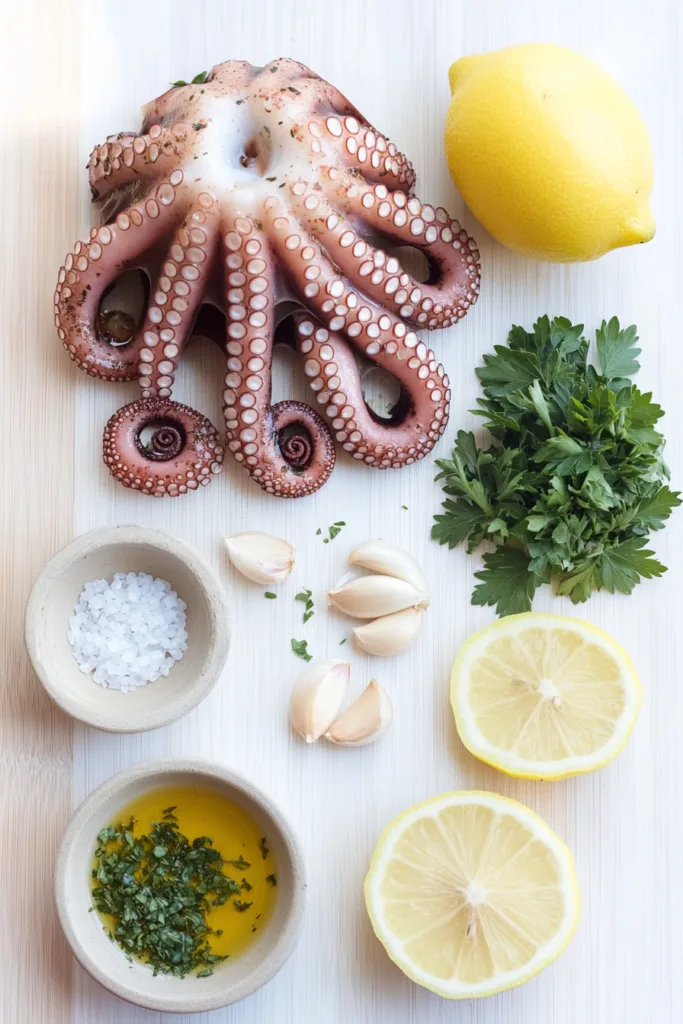
Every ingredient has a purpose here, from creating tenderness to adding brightness and aroma in the final dish.
- 2 pounds fresh octopus (baby, medium or large) – This is the foundation of the recipe. The quantity is important because the boiling guideline is based on approximately 2 pounds. Baby and medium octopus tend to be especially tender, though larger octopus works as well. The octopus provides the meaty texture and rich seafood flavor that defines the dish.
- Olive oil – Used both during the resting period and again before serving, olive oil coats the octopus and helps carry the flavors of the garlic, lemon, and herbs. It also contributes a silky finish and helps the exterior develop appealing color during grilling.
- 2 garlic cloves, roughly chopped – Garlic adds a savory layer that complements the mild sweetness of the octopus. The amount is enough to infuse flavor without overpowering the seafood. Rough chopping allows the garlic to release flavor while resting with the octopus.
- Juice from 1 lemon – Fresh lemon juice brings brightness and acidity to the finished dish. The quantity provides enough citrus flavor to balance the olive oil and enhance the natural taste of the octopus without overwhelming it.
- Salt and pepper to taste – These simple seasonings help highlight the flavors already present in the recipe. Added at the end, they allow you to adjust the final taste according to your preference.
- 1/2 teaspoon dried oregano – Oregano adds a subtle herbal note that pairs beautifully with grilled seafood. The small amount provides flavor without taking attention away from the octopus and lemon.
- 2 teaspoons chopped fresh parsley – Fresh parsley contributes color and a clean, fresh finish. The quantity is enough to brighten the dish visually and flavor-wise while keeping the overall profile balanced.
How to Make Grilled Octopus with Olive Oil and Lemon
There’s something mighty satisfying about taking a simple ingredient and turning it into a meal that makes everyone at the table stop and take notice. The good news is that this recipe follows a straightforward process, and each step builds flavor while helping the octopus become beautifully tender.
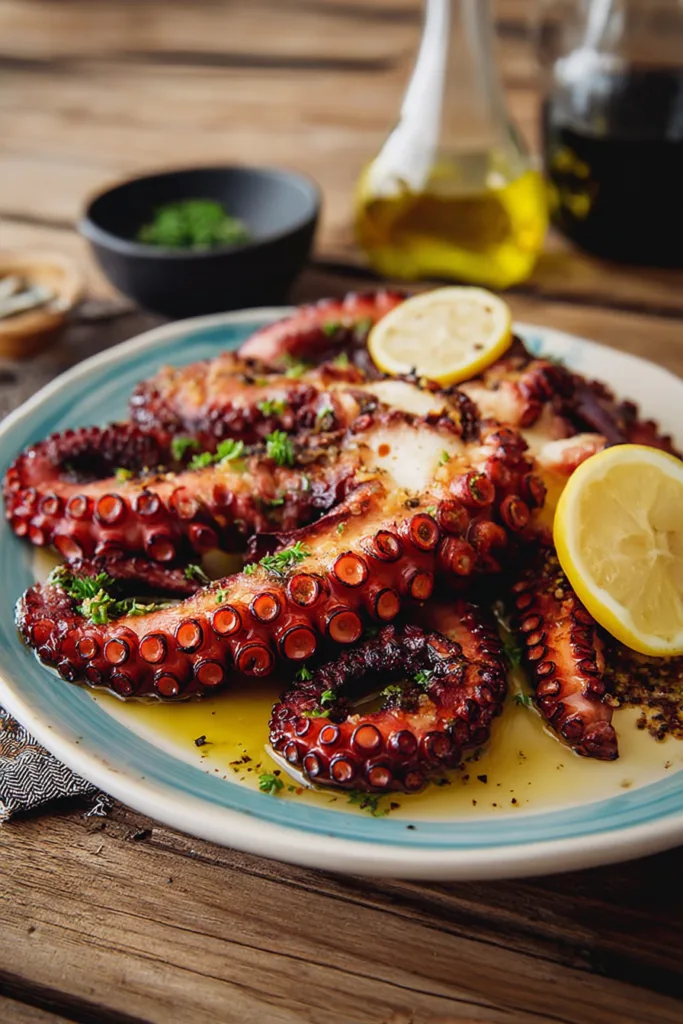
- Boil the octopus by placing it in a large pot and covering it with enough water. Bring the water to a boil and cook for about 40 minutes. For larger pieces, continue cooking within the recommended 40–60 minute range, using the guideline of roughly 45 minutes per 2 pounds.
- Remove the octopus from the hot water and rinse it. Transfer it to a bowl so it’s ready for the next layer of flavor.
- Drizzle the octopus with olive oil and add the roughly chopped garlic. Allow it to cool and rest at room temperature for 30 minutes to 1 hour so the flavors can mingle.
- Preheat a gas grill to medium-high heat. Slice the octopus tentacles into pieces that are easy to handle on the grill.
- Grill the sliced octopus for 3–4 minutes per side until charred. If you prefer, you can cook it in a pan on the stovetop instead.
- Finish the dish by transferring the grilled octopus to a bowl. Drizzle with olive oil and lemon juice, then season with salt and pepper. Sprinkle oregano and parsley over the top before serving.
Tips for the Best Grilled Octopus with Olive Oil and Lemon
- Choose the Right Size — Baby or medium octopus tends to work especially well for this recipe, though larger octopus can also be used successfully.
- Follow the Boiling Range — The recommended 40–60 minute cooking window helps create tender octopus. For a 2-pound octopus, around 45 minutes is the general guideline.
- Use the Fork Test — Check doneness by inserting a fork where the head meets the tentacles. It should slide in and out easily.
- Don’t Skip the Resting Time — Allowing the octopus to sit with olive oil and garlic for 30 minutes to 1 hour helps build flavor before grilling.
- Char for Extra Flavor — A few minutes per side on the grill creates the signature charred exterior that makes this dish so memorable.
- Finish Just Before Serving — Adding the lemon juice, parsley, and seasonings after grilling keeps the flavors bright and fresh, similar to many high protein mediterranean meals that rely on simple finishing ingredients.
Storage & Make-Ahead Tips
Fridge: Store leftover cooked octopus in an airtight container in the refrigerator for up to 3–4 days. For the best flavor, keep any remaining lemon juice and herbs with the octopus so it stays well seasoned.
Freezer: Place cooled octopus in a freezer-safe container or bag and freeze for up to 3 months. Thaw overnight in the refrigerator before serving or reheating.
Make-Ahead: The boiling step can be completed ahead of time. After boiling, rinse the octopus and store it refrigerated. When ready to serve, continue with the olive oil, garlic, grilling, and final seasoning steps.
What to Serve With Grilled Octopus with Olive Oil and Lemon
This dish shines when paired with simple sides that complement its bright citrus flavor and smoky grilled character. Keeping the accompaniments straightforward allows the octopus to remain the centerpiece of the meal.
- Crisp green salads
- Feta cheese
- Mixed olives
- Capers
- Fresh vegetable platters
- Simple grain-based side dishes
Good food has a way of bringing people together, and this grilled octopus does exactly that. Between the tender texture, smoky char, fresh lemon, and fragrant herbs, every bite feels like something worth gathering around the table for.
Frequently Asked Questions
Q: What size octopus works best for this recipe?
Baby and medium octopus are generally the preferred options because they tend to cook evenly and develop a tender texture. That said, large octopus can absolutely be used. The key is following the recommended boiling range and checking tenderness with a fork before moving on to the grilling step.
Q: How do I know when the octopus is tender enough?
The recipe provides a simple test. Insert a fork where the head meets the tentacles. If the fork slides in and out easily, the octopus is ready. If it still feels resistant, continue cooking within the recommended time range and test again.
Q: Why is the octopus boiled before grilling?
Boiling helps tenderize the octopus before it reaches the grill. The grilling stage is relatively short and is mainly used to create char and add flavor. Starting with boiled octopus ensures the final texture is enjoyable and not overly firm.
Q: Can I cook this recipe without a grill?
Yes. The instructions specifically note that the octopus can be cooked in a pan on the stovetop as an alternative. You’ll still be able to develop color on the outside while finishing the dish with olive oil, lemon juice, and herbs.
Q: Why does the octopus rest with olive oil and garlic?
The resting period allows the olive oil and chopped garlic to coat the octopus before grilling. During the 30-minute to 1-hour rest, the flavors have time to settle onto the surface, helping build a more flavorful finished dish.
Q: Is oregano required?
No. The recipe lists oregano as optional. The octopus will still be delicious with olive oil, lemon juice, parsley, salt, and pepper. Oregano simply adds an additional herbal note for those who enjoy it.
Q: What can I serve alongside grilled octopus?
The recipe notes that it pairs beautifully with crisp salads, feta cheese, olives, and capers. These accompaniments complement the bright lemon flavor and create a balanced meal without competing with the grilled seafood.
Q: Can this be part of mediterranean dinner recipes?
Absolutely. The combination of seafood, olive oil, lemon, garlic, and herbs fits naturally into many mediterranean-inspired menus. Pair it with fresh vegetables and simple sides for an inviting meal centered around bold yet uncomplicated flavors.
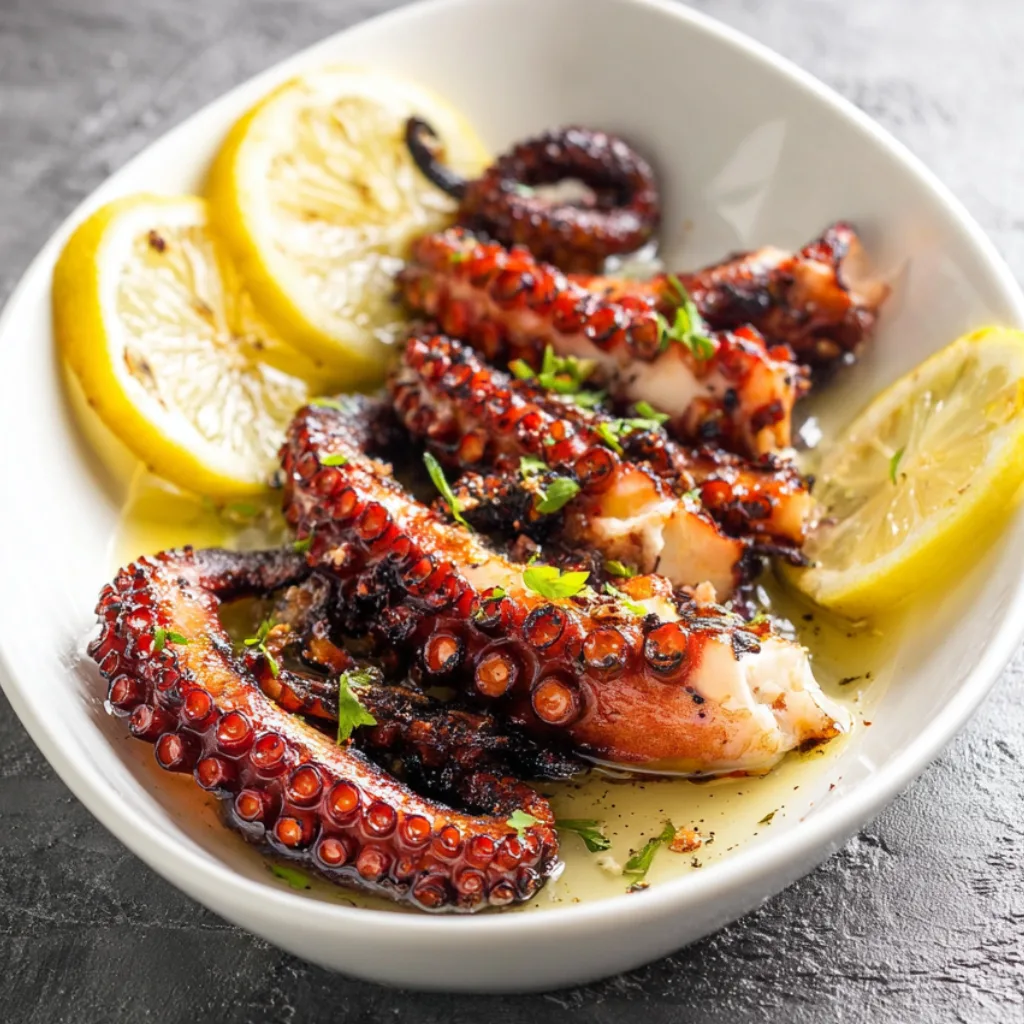
Grilled Octopus with Olive Oil and Lemon
Ingredients
Method
- Place the octopus in a pot and cover with enough water.
- Bring the water to a boil and cook the octopus for 40 minutes, or within the recommended 40–60 minute range depending on size.
- Remove the octopus from the hot water, rinse it, and place it in a bowl.
- Drizzle the octopus with olive oil and add the roughly chopped garlic.
- Allow the octopus to cool and rest at room temperature for 30 minutes to 1 hour.
- Preheat a gas grill to medium-high heat.
- Slice the octopus tentacles.
- Grill the octopus for 3–4 minutes per side until charred, or cook in a pan on the stovetop.
- Transfer the grilled octopus to a bowl.
- Drizzle with olive oil and lemon juice.
- Season with salt and pepper.
- Sprinkle with oregano and parsley before serving.