Rich, tangy, and unbelievably creamy, this homemade labneh turns simple yogurt into something downright special. With just two ingredients and a little patience, you’ll end up with a silky spread that feels fancy but couldn’t be easier to make at home. Whether it’s tucked into a weekend snack board or set out beside warm pita for family gatherings, this is the kind of recipe that brings folks running back for one more bite.
Why You’ll Love This Labneh (Strained Yogurt with Olive Oil)
- Only Two Main Ingredients: Whole milk yogurt and kosher salt are all you need to create this rich and creamy spread.
- Big Flavor, Minimal Effort: The straining process does all the heavy lifting, transforming plain yogurt into thick, tangy labneh.
- Beautiful for Sharing: Served with olive oil, herbs, pita, and vegetables, this dish looks welcoming and generous on any table.
- Versatile Texture: Strain it for 24 hours for a softer spread or longer for a thicker consistency that can even be rolled into balls.
- Perfect for Snacking: It works beautifully as a dip, spread, or centerpiece for casual grazing boards and light bites.
- Great for Make-Ahead Serving: Once prepared, labneh keeps well in the refrigerator, making entertaining much easier.
- Restaurant-Style at Home: That drizzle of extra virgin olive oil and sprinkle of za’atar give homemade labneh a bold, impressive finish.
Ingredients You’ll Need
One of my favorite things about making labneh is how a couple of humble ingredients can turn into something so rich and satisfying. If you enjoy easy mediterranean diet recipes that feel both comforting and impressive, this one deserves a permanent spot in your kitchen rotation.
Every ingredient here has a purpose, and keeping the balance just right gives the labneh its signature creamy texture and bright flavor.

- 4 cups whole milk yogurt: Whole milk yogurt creates the rich, creamy texture that makes labneh so luxurious. Using the full amount ensures enough moisture drains away while still leaving a thick and spreadable consistency. The higher fat content also gives the finished labneh a smooth, velvety mouthfeel that’s hard to beat.
- 3/4 teaspoon kosher salt: Salt seasons the yogurt and helps bring out its tangy flavor without overpowering it. This amount gives the labneh balance and keeps it tasting savory and bright.
- Extra virgin olive oil: A drizzle of olive oil adds richness and a silky finish when serving. It also helps balance the tanginess of the strained yogurt while adding beautiful color and depth.
- Za’atar or chopped fresh herbs: Za’atar adds earthy, savory flavor with a little texture, while fresh herbs like mint or parsley bring brightness and freshness to the bowl.
- Warm pita bread: Soft, warm pita is perfect for scooping up thick labneh and catching every bit of olive oil and herbs.
- Sliced vegetables: Fresh vegetables add crunch and contrast against the creamy spread, making the whole platter feel fresh, colorful, and inviting.
How to Make Labneh (Strained Yogurt with Olive Oil)
I’ve made this recipe more times than I can count, and every single time I’m amazed at how plain yogurt transforms into something so rich and special. It feels like a little kitchen magic — the kind of old-school recipe that reminds me simple ingredients can still steal the whole show.
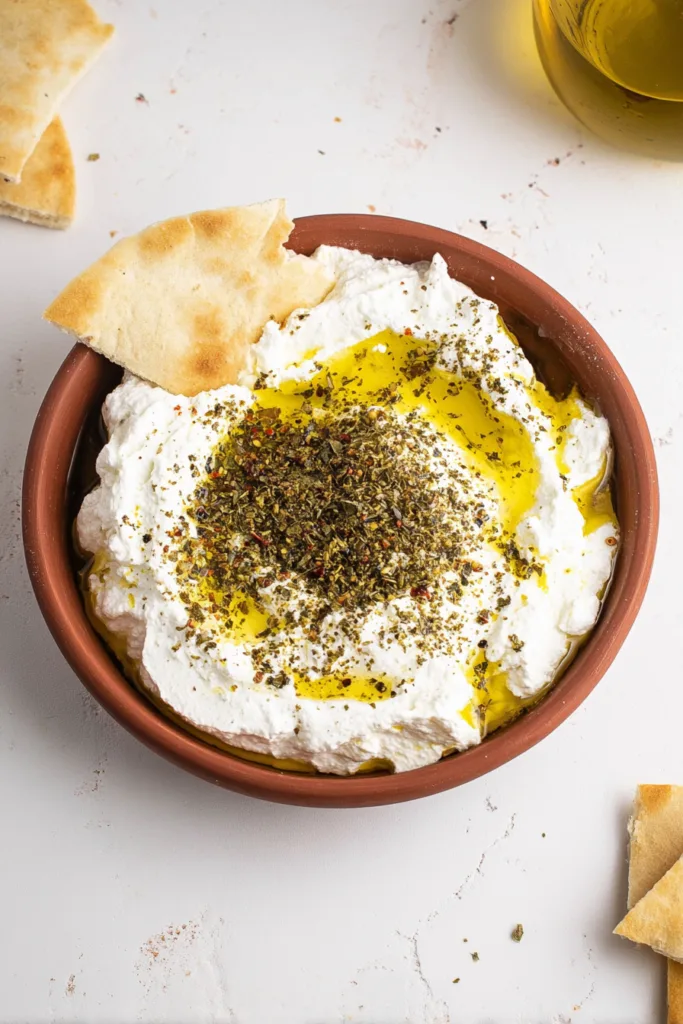
- Season the yogurt by pouring it into a large bowl and stirring in the kosher salt until fully combined. The salt evenly flavors the yogurt and helps create that signature savory tang in the finished labneh.
- Prepare your draining setup by lining another large bowl with a linen towel, muslin towel, or several layers of cheesecloth. Pour the yogurt mixture into the towel, then gather the edges together and tie them securely at the top.
- Drain the yogurt for 24 to 48 hours by hanging the towel from a kitchen sink faucet. If preferred, place a lined sieve over a deep bowl instead, add the yogurt mixture, and loosely cover it with the towel before setting it aside on the counter or in the refrigerator.
- Check the texture after draining. At 24 hours, the labneh will be soft and creamy like a thick spread. After 48 hours, it becomes much thicker and sturdy enough for shaping or longer storage in olive oil.
- Serve the labneh spread into a shallow bowl and finish it with extra virgin olive oil and za’atar or chopped fresh herbs. Set out warm pita bread and sliced vegetables alongside for dipping and scooping.
Tips for the Best Labneh (Strained Yogurt with Olive Oil)
- Use Whole Milk Yogurt — Whole milk yogurt gives the labneh its rich texture and creamy consistency after straining.
- Choose a Sturdy Towel — Linen, muslin, or several layers of cheesecloth help the yogurt drain properly while holding everything securely.
- Adjust the Straining Time — A 24-hour strain creates a softer spread, while a full 48 hours produces a thicker labneh that can be rolled into balls for preserving.
- Keep the Yogurt Covered — If using the sieve method, gently covering the yogurt while it drains helps keep the texture smooth and protected.
- Use Good Olive Oil for Serving — Since the olive oil is one of the main finishing flavors, a high-quality extra virgin olive oil makes a noticeable difference.
- Serve It Chilled or Cool — Labneh tastes especially refreshing straight from the refrigerator, particularly alongside fresh vegetables and warm pita for quick mediterranean recipes.
Storage & Make-Ahead Tips
Fridge: Store the labneh in a tight-lid container in the refrigerator for up to 2 weeks. It works beautifully as a spread, dip, or addition to snack plates throughout the week.
Freezer: Freezing is not recommended for the best texture since strained yogurt can become grainy after thawing. For longer storage, preserving the labneh in olive oil works much better.
Make-Ahead: For longer keeping, strain the yogurt for a full 48 hours until very thick. Roll the labneh into small balls, refrigerate them overnight between paper towels, then submerge them completely in olive oil inside a clean jar. Stored this way in the refrigerator, the labneh can last for months.
What to Serve With Labneh (Strained Yogurt with Olive Oil)
Labneh fits right into all kinds of relaxed gatherings and snack-style meals. I love setting it out in the middle of the table with plenty of things for dipping and scooping so everybody can help themselves.
- Warm pita bread
- Fresh sliced vegetables
- Simple grain salads
- Roasted vegetables
- Olives and pickled vegetables
- Crackers or flatbread
Frequently Asked Questions
Q: What is the difference between labneh and regular yogurt?
Labneh is yogurt that has been strained to remove much of its liquid. That process creates a thicker, creamier texture with a richer flavor than regular yogurt. While plain yogurt is spoonable and loose, labneh becomes spreadable and works more like a soft cheese or thick dip.
Q: How long should I strain the yogurt?
The straining time depends on the texture you want. After about 24 hours, the labneh will be soft, creamy, and easy to spread. If you continue straining for closer to 48 hours, it becomes much thicker and sturdy enough to shape into balls for storing in olive oil.
Q: Can I use low-fat yogurt instead of whole milk yogurt?
Whole milk yogurt is what gives this recipe its rich and creamy consistency. Lower-fat yogurt may still strain properly, but the final texture will usually be less smooth and less luxurious. The richness from whole milk yogurt is part of what makes homemade labneh feel so satisfying.
Q: Why does the yogurt need salt?
The kosher salt seasons the yogurt and balances its tangy flavor. Even though the amount is small, it makes a big difference in the final taste. Without salt, the labneh can taste flat instead of savory and bright.
Q: Can I strain the yogurt in the refrigerator?
Yes, you can absolutely strain the yogurt in the refrigerator using the sieve method described in the recipe. Some folks prefer refrigerating it during the draining process, especially for longer straining times. The important part is giving the yogurt enough time to release the excess liquid.
Q: What does za’atar taste like with labneh?
Za’atar adds earthy, savory flavor and a little texture that pairs beautifully with creamy labneh. Combined with extra virgin olive oil, it creates a bold topping that makes the whole dish feel extra special without requiring any complicated ingredients.
Q: Can I use labneh as a spread?
Absolutely. Labneh works wonderfully as a spread anywhere you might use cream cheese or other soft spreads. Its thick texture makes it easy to spread onto warm pita, breads, or crackers while adding a tangy and creamy flavor.
Q: Is labneh good for mediterranean meal prep?
Yes, labneh stores very well in the refrigerator, which makes it convenient for assembling snack boards, vegetable plates, and quick lunches throughout the week. Having a batch ready to go makes it easy to put together simple meals and shareable appetizers without much extra work.
There’s something mighty special about a recipe that takes such simple ingredients and turns them into a bowl full of comfort and flavor. Once you make homemade labneh yourself, it’s hard not to keep finding new ways to enjoy it.

Labneh (Strained Yogurt with Olive Oil)
Ingredients
Method
- Pour the yogurt into a large bowl.
- Stir the kosher salt into the yogurt until combined.
- Line a large bowl with a linen towel, muslin towel, or several layers of cheesecloth.
- Pour the yogurt mixture into the towel.
- Gather the towel edges together and tie securely at the top.
- Hang the towel from a kitchen sink faucet and allow the yogurt to drain for 24 to 48 hours.
- Alternatively, place a towel-lined sieve over a deep bowl, add the yogurt mixture, cover gently, and drain on the counter or in the refrigerator for 24 to 48 hours.
- Spread the labneh into a serving bowl.
- Top with extra virgin olive oil and za’atar or chopped fresh herbs.
- Serve with warm pita bread and sliced vegetables.