Rich, cozy broth and tender shredded chicken make this Molokhia feel like pure comfort in a bowl. Even if you’ve never cooked with jute leaves before, this recipe walks you through every step in a simple, approachable way. It’s the kind of meal that brings everybody to the table—warm rice piled high, lemon wedges on the side, and stories flowing right along with supper.
Why You’ll Love This Molokhia (Jute Leaf Stew with Chicken)
- Deep savory flavor: The slow-simmered chicken broth builds a hearty base that tastes like it’s been cooking all day.
- Family-style comfort: Served with rice, shallot garnish, and lemon wedges, this stew turns dinner into a full experience around the table.
- Simple ingredients: Most of the ingredients are pantry staples plus one special frozen molokhia packet from the freezer section.
- Balanced texture: The shredded chicken and silky molokhia create a stew that’s hearty without feeling heavy.
- Customizable heat: Between the jalapeño, optional serrano, and lemon wedges, everybody can fix their bowl exactly how they like it.
- Built from tradition: The peppers and whole tomato simmering in the broth give this recipe a deeply personal, passed-down feel that makes it extra special.
- Perfect for sharing: With enough for six people, this is the kind of dish that shines at family dinners and cozy gatherings alike.
Ingredients You’ll Need
One thing I absolutely love about this Molokhia is how a handful of humble ingredients can turn into something so comforting and full of personality. The broth does most of the heavy lifting here, while the molokhia brings that signature silky texture that folks know and love in many mediterranean chicken recipes.
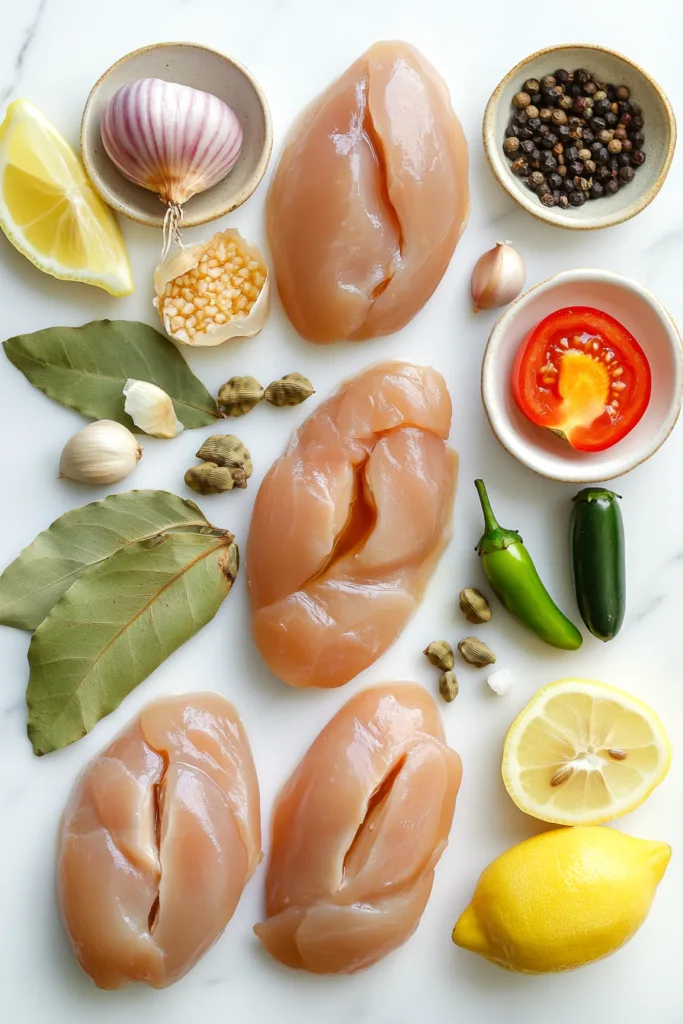
Every ingredient has a purpose in this pot, and once you taste that final spoonful with the fried garlic and coriander topping stirred in, you’ll understand exactly why each one matters.
- 3 lbs chicken breasts: Bone-in and skin-on chicken breasts create a richer broth with more depth and body. The chicken also shreds beautifully after simmering, giving the stew plenty of hearty texture. Boneless and skinless chicken breasts can be used if preferred, and bone-in chicken thighs are another option for a deeper dark meat flavor.
- Kosher salt and black pepper: These season the chicken from the very beginning and help build flavor throughout the broth. Liberal seasoning before searing helps every layer of the stew taste balanced instead of flat.
- 2 tablespoons olive oil: Used for searing the chicken, the olive oil helps create flavor in the pot before the broth even begins. It also gives the stew a smooth richness without overpowering the other ingredients.
- 1 onion, peeled and cut in half: The onion gently flavors the broth as it simmers. Keeping it in large halves makes it easy to strain out later while still adding sweetness and depth.
- 3–4 garlic cloves: Garlic adds savory warmth to the broth itself. Since more garlic is added later in the adha, this first layer creates a nice foundation without becoming overpowering.
- 4–5 cups water: The water forms the base of the broth and should fully cover the chicken while it cooks. That long simmer transforms it into a rich, flavorful cooking liquid for the molokhia.
- 1 bay leaf: Bay leaf adds subtle background flavor during the simmering process and helps round out the broth.
- 8–10 cardamom pods: Cardamom gives the broth a warm aromatic flavor that makes the stew taste extra comforting and layered.
- 1 packet frozen chopped molokhia: This is the heart of the recipe. Frozen chopped molokhia is convenient, easy to work with, and melts right into the broth to create the stew’s signature texture. Look for it in the frozen section of Middle Eastern grocery stores.
- 1 jalapeño, cut in half: The jalapeño adds gentle heat while simmering in the stew. It also plays a role in the family tradition of helping reduce the slimy texture sometimes associated with molokhia.
- 1 small sweet pepper, cut in half: The sweet pepper balances the jalapeño with a touch of sweetness while simmering in the broth.
- 1 small tomato, slit with a knife but kept whole: The whole tomato adds subtle flavor to the stew while also being part of the traditional technique used to help neutralize excess sliminess from the molokhia.
- 2 tablespoons olive oil (for the adha): This second addition of olive oil is used to fry the garlic and coriander topping that gets poured directly into the stew at the end.
- 1 tablespoon ground coriander: Ground coriander gives the adha its signature bold flavor and pairs beautifully with the garlic.
- 3–4 garlic cloves, finely crushed: These garlic cloves are fried briefly with the coriander to create the finishing topping that gives the stew its unmistakable flavor boost.
- 2 shallots, very finely chopped: The shallots bring crunch and sharpness to the garnish, adding contrast to the warm stew.
- ½ jalapeño or serrano pepper, very finely chopped: This optional garnish ingredient adds extra heat and freshness right before serving. You can adjust the amount to suit your taste.
- ¼ cup white vinegar: The vinegar sharpens the shallot garnish and balances the richness of the stew beautifully.
- Water to dilute: A little water softens the sharpness of the vinegar in the garnish so it complements the stew instead of overpowering it.
- Lemon wedges: Fresh lemon squeezed over the stew right before eating brightens every bite and ties all the flavors together.
How to Make Molokhia (Jute Leaf Stew with Chicken)
This is one of those recipes that fills the whole kitchen with the kind of smell that makes folks wander in asking, “What are you cooking?” The magic really happens in layers here—from the rich broth to that sizzling garlic topping poured right into the pot at the end.
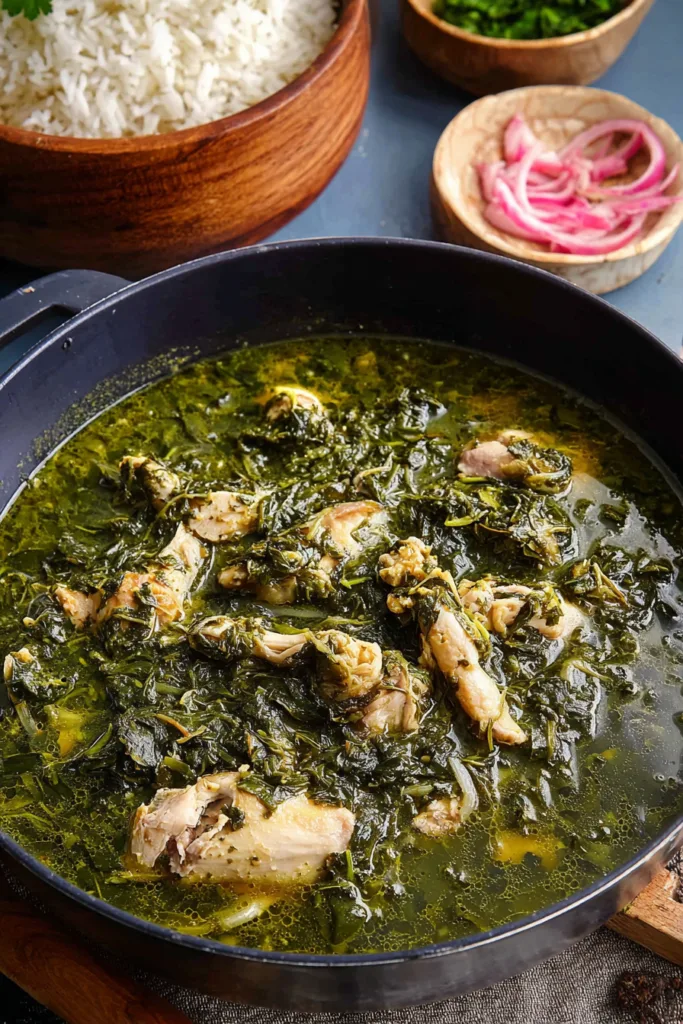
- Sear the chicken after seasoning it generously with kosher salt and black pepper. Heat the olive oil in a large Dutch oven or heavy pot over medium-high heat, then place the chicken skin side down and cook for 3 minutes. Flip and sear the second side for another 3 minutes. The chicken does not need to cook through at this stage since it will continue simmering in the broth.
- Build the broth by adding the onion halves and peeled garlic cloves directly into the same pot. Pour in enough water to cover the chicken, then add the bay leaf and cardamom pods. Bring everything to a boil before lowering the heat to a simmer. Cover partially and cook for 45–60 minutes so the broth develops its full flavor.
- Strain the broth carefully once the chicken is cooked. Remove the chicken pieces and place them on a plate to cool slightly. Pour the broth through a fine mesh sieve into a clean pot to remove the onion, garlic, bay leaf, and cardamom pods. Let the chicken rest for about 15 minutes, then shred it into bite-sized pieces.
- Cook the molokhia by adding the frozen chopped molokhia directly into the strained broth. Bring the mixture to a boil, then add the halved jalapeño, sweet pepper, and slit tomato. Lower the heat and simmer for 10 minutes. Taste the stew and adjust the seasoning if needed. Remove the tomato and peppers if desired, then stir the shredded chicken back into the pot.
- Fry the adha in a separate frying pan by heating olive oil with the ground coriander and finely crushed garlic cloves over medium heat. Cook for 30–60 seconds, being careful not to burn the garlic. Immediately pour the hot mixture all over the stew and stir it in thoroughly.
- Serve the molokhia hot with rice, lemon wedges, and the shallot garnish made from chopped shallots, peppers, vinegar, and water. That little spoonful of sharp shallot topping over the warm stew takes every bite to another level.
Tips for the Best Molokhia (Jute Leaf Stew with Chicken)
- Season the chicken well — A generous seasoning of salt and black pepper before searing helps flavor the entire broth from the very beginning.
- Don’t skip the sear — Browning the chicken in olive oil creates a richer foundation for the stew and adds depth to the finished broth.
- Use frozen chopped molokhia — The chopped frozen version blends smoothly into the broth and keeps the process much simpler, especially for first-time cooks trying healthy mediterranean meals at home.
- Watch the garlic carefully — The garlic in the adha cooks quickly, so keep it moving and remove it from the heat before it burns.
- Strain the broth thoroughly — Running the broth through a fine mesh sieve creates a smoother stew and removes the softened aromatics and cardamom pods.
- Serve with lemon — Fresh lemon squeezed over each bowl brightens the richness of the broth and balances the earthy flavor of the molokhia beautifully.
Storage & Make-Ahead Tips
Fridge: Store leftover molokhia in an airtight container in the refrigerator for up to 3–4 days. The flavors continue to deepen as the stew sits, making leftovers especially delicious the next day.
Freezer: Let the stew cool completely before transferring it to freezer-safe containers. Freeze for up to 3 months. Thaw overnight in the refrigerator before reheating gently on the stovetop.
Make-ahead: The chicken broth can be prepared ahead of time and refrigerated until ready to finish the stew. You can also chop the shallot garnish ingredients in advance to make serving even easier.
What to Serve With Molokhia (Jute Leaf Stew with Chicken)
This stew shines brightest when it’s served family-style with simple sides that soak up all that rich broth. I love building a full table around it so everybody can fix their bowl exactly how they like it.
- Steamed rice
- Warm flatbread or crusty bread
- Simple cucumber salad
- Pickled vegetables
- Fresh sliced tomatoes and onions
- Lemon wedges for squeezing over the top
Frequently Asked Questions
Q: What does molokhia taste like?
Molokhia has a deep earthy flavor with a silky texture that becomes rich and comforting once simmered into broth. In this recipe, the chicken broth, garlic, coriander, and lemon help balance the flavor beautifully, giving the stew a savory finish that feels hearty without being too heavy.
Q: Can I use boneless chicken breasts instead of bone-in chicken?
Yes, boneless and skinless chicken breasts work well in this recipe if that’s what you have available. Bone-in and skin-on chicken breasts create a richer broth during simmering, but the recipe notes specifically mention boneless chicken as an acceptable substitute.
Q: Why are the tomato and peppers added whole?
The halved peppers and slit tomato are used as part of a traditional family technique believed to help reduce some of the slimy texture associated with molokhia. The recipe notes explain that this method has become part of the family tradition, even without scientific proof behind it.
Q: Do I have to remove the tomato and peppers before serving?
No, removing them is optional. The recipe includes them mainly for simmering flavor and texture balance, but you can leave them in the stew if you enjoy the added vegetables in the final dish.
Q: What is adha?
Adha is the fried garlic and coriander topping added at the very end of cooking. The garlic and coriander are briefly fried in olive oil, then poured directly into the stew. It gives the molokhia a bold finishing flavor that completely transforms the broth.
Q: Can I make this as part of mediterranean meal prep?
Absolutely. The stew stores very well in the refrigerator and freezer, making it easy to portion out for lunches or dinners throughout the week. Keeping the lemon wedges and shallot garnish separate until serving helps everything stay fresh and vibrant.
Q: Where can I find molokhia leaves?
Frozen chopped molokhia is usually sold in the frozen section of Middle Eastern grocery stores. The recipe specifically recommends using frozen chopped molokhia because it’s convenient and easy to add directly into the broth.
Q: What should I serve with molokhia?
Rice is the traditional pairing and works beautifully for soaking up the flavorful broth. The shallot garnish and lemon wedges add freshness and brightness, making the entire meal feel balanced and satisfying.
There’s something mighty special about gathering around a big pot of Molokhia with folks you love. Between the rich broth, the garlicky adha, and that bright squeeze of lemon right at the end, every bowl feels comforting, bold, and full of heart.
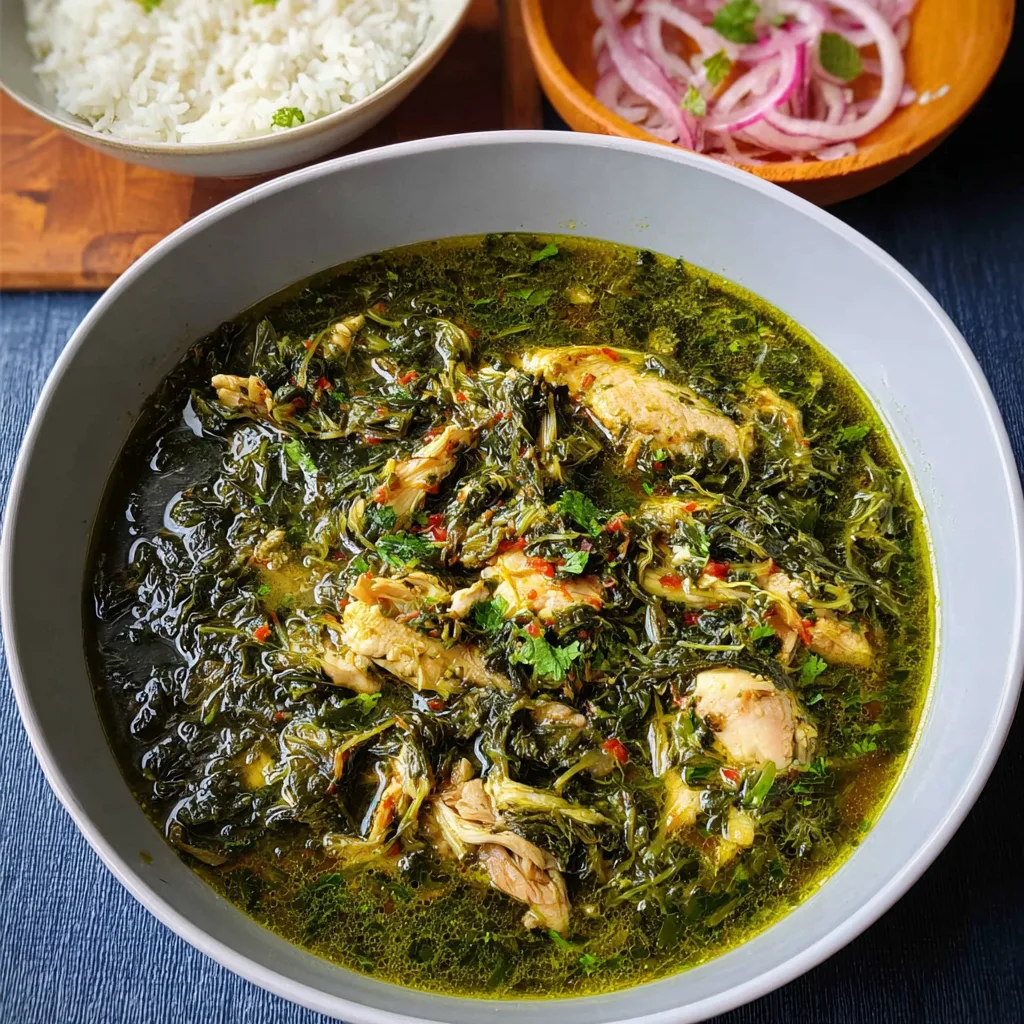
Molokhia (Jute Leaf Stew with Chicken)
Ingredients
Method
- Season the chicken pieces liberally with kosher salt and black pepper.
- Heat 2 tablespoons olive oil in a large Dutch oven or pot over medium-high heat and sear the chicken skin side down for 3 minutes.
- Flip the chicken and sear the other side for 3 minutes.
- Add the onion halves and peeled garlic cloves to the pot.
- Pour in the water, making sure the chicken is covered.
- Add the bay leaf and cardamom pods.
- Bring the broth to a boil, then simmer partially covered on low heat for 45-60 minutes.
- Remove the chicken pieces and set them aside on a plate.
- Strain the broth through a fine mesh sieve into a clean pot.
- Let the chicken cool for 15 minutes, then shred into bite-sized pieces.
- Add the frozen chopped molokhia to the strained broth and bring to a boil.
- Add the halved jalapeno, sweet pepper, and slit tomato.
- Simmer on low for 10 minutes.
- Taste and adjust seasoning if needed.
- Remove the tomato and peppers if desired.
- Return the shredded chicken to the stew.
- Heat 2 tablespoons olive oil in a frying pan over medium heat.
- Add the ground coriander and finely crushed garlic cloves.
- Fry for 30-60 seconds without burning the garlic.
- Pour the adha over the stew and stir.
- Combine the chopped shallots, chopped pepper, white vinegar, and water in a small bowl.
- Serve the stew with rice, shallot garnish, and lemon wedges.