Light as a cloud with a crisp shell and marshmallow-soft center, this Pavlova with Fresh Berries feels downright special every single time it hits the table. Even though it looks bakery-worthy, the process is surprisingly approachable once you take it step by step. Whether you’re setting out a beautiful dessert for family dinner or bringing something show-stopping to a warm-weather gathering, this sweet beauty always steals the spotlight.
Why You’ll Love This Pavlova with Fresh Berries
- Crispy Outside, Soft Center: The contrast between the crisp meringue shell and fluffy marshmallow-like middle makes every bite extra satisfying.
- Beautiful Presentation: Those swirls, berries, and clouds of whipped cream make this dessert look incredibly impressive on the table.
- Simple Ingredient List: You only need a handful of pantry staples plus fresh fruit to pull this dessert together.
- Perfect for Gatherings: This recipe serves eight, making it wonderful for sharing with family and friends.
- Fresh Berry Flavor: The raspberries, blackberries, and strawberries add bright sweetness and a little tartness that balances the meringue beautifully.
- Fun to Customize: You can garnish with mint leaves or adjust the sweetness of the whipped cream and berries to suit your taste.
- A Gorgeous Easy Dessert: Even with its elegant look, the recipe walks you through each stage in a very manageable way.
Ingredients You’ll Need
One thing I absolutely adore about Pavlova with Fresh Berries is how a few humble ingredients can turn into something that feels downright celebratory. Every component has a purpose here—from the carefully whipped egg whites to the juicy berries piled high on top—and together they create one of those dessert recipes folks remember long after the plates are cleared.
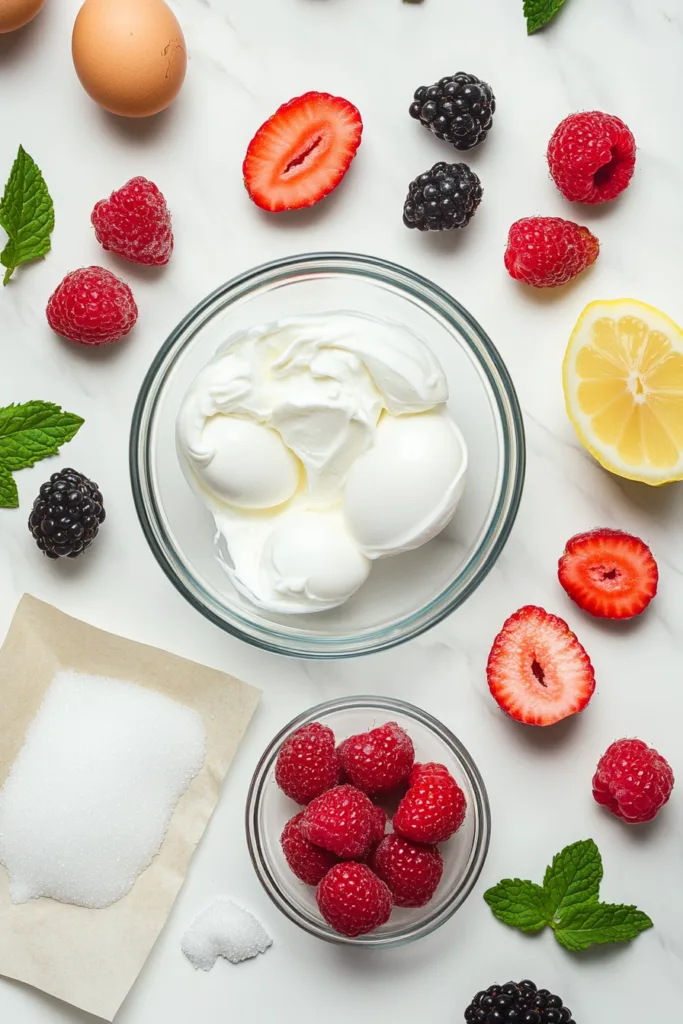
Using the right quantities matters with meringue, so don’t rush the measuring. That balance between sugar and egg whites is what gives this pavlova its signature crisp exterior and soft center.
- 4 egg whites from large eggs: Egg whites are the entire structure of the pavlova, creating the airy meringue base. Using whites from large eggs helps keep the ratio correct so the pavlova whips up with enough volume and stability. Be careful not to let any yolk slip into the bowl, since even a tiny amount can interfere with whipping.
- 200 grams (1 cup) granulated sugar: Sugar sweetens the meringue while also helping stabilize the whipped egg whites. Adding it slowly is important so it dissolves properly and doesn’t leave the pavlova grainy. The quantity here is carefully balanced to help create that crisp shell and marshmallow-like interior.
- 1 teaspoon vanilla extract: Vanilla gives the meringue a soft, sweet warmth that rounds out the flavor beautifully without overpowering the berries.
- A splash of lemon juice: Lemon juice helps stabilize the egg whites while whipping, making it easier for the meringue to hold stiff peaks. It also adds a subtle brightness to the flavor. The recipe notes that a small amount of cream of tartar can be used instead.
- 360 ml (1.5 cups) heavy whipping cream: Heavy whipping cream creates the rich, fluffy layer tucked into the center of the pavlova. Its high fat content helps it whip into soft peaks that hold their shape nicely when spooned over the meringue.
- 1–2 teaspoons granulated sugar: This optional sugar lightly sweetens the whipped cream. The recipe keeps the whipped cream mostly unsweetened so the berries and meringue stay balanced, but you can add a little if you prefer a sweeter finish.
- Splash of vanilla extract: A little vanilla in the whipped cream ties the flavors together and gives the cream a cozy sweetness.
- 110 grams (1 cup) raspberries: Raspberries bring tartness and softness to the topping, helping cut through the sweetness of the meringue.
- 125 grams (1 cup) blackberries: Blackberries add juicy texture and deeper berry flavor that pairs beautifully with the whipped cream.
- 135 grams (1 cup) strawberries, quartered or halved: Strawberries provide sweetness, freshness, and a little extra body to the fruit topping. Quartering or halving them helps distribute the fruit evenly across the pavlova.
- 1–2 tablespoons granulated sugar: Sugar helps draw juices from the berries as they sit, creating a lightly syrupy mixture that spooned beautifully over the whipped cream.
- Splash of lemon juice: Lemon juice brightens the fruit topping and balances the sweetness of the berries and meringue.
- Mint leaves (optional, for garnish): Mint leaves add a fresh pop of color and a cool finish that makes the pavlova look especially pretty when serving.
How to Make Pavlova with Fresh Berries
I still get a little excited watching a pavlova come together because it feels like kitchen magic every single time. With a little patience and a gentle hand, you’ll end up with a dessert that looks bold and beautiful sitting right there on your table.
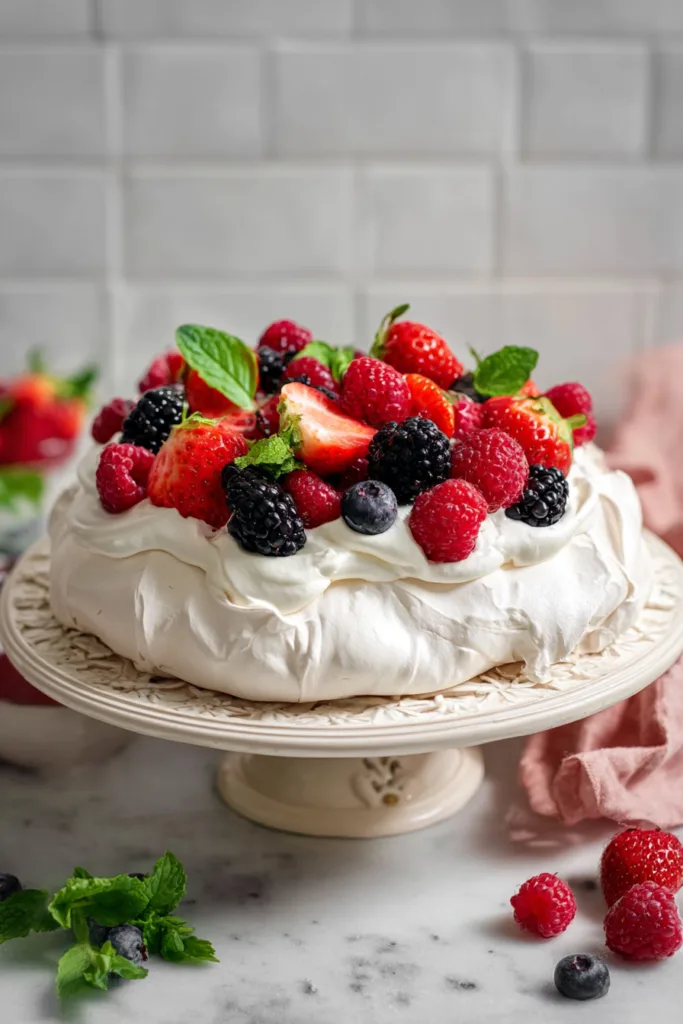
- Preheat your oven to 220 F (100 C) and carefully separate the egg whites from the yolks. Make sure no yolk gets into the whites, since even a small amount can affect how the meringue whips. Keep your mixing bowl completely clean and free of any oil or residue before adding the egg whites and lemon juice.
- Whip the egg whites in the bowl of a stand mixer with the whisk attachment until frothy. Add the vanilla extract, then slowly add the granulated sugar one tablespoon at a time while the mixer runs. Scrape down the bowl occasionally so sugar crystals don’t cling to the sides, and continue whisking until stiff peaks form.
- Shape the meringue on a parchment-lined baking sheet after placing a little meringue under each corner of the parchment to help hold it in place. Form the mixture into a large 8–9 inch circle, building the edges slightly higher than the center to create a well for the whipped cream. Use a palette knife to swirl the edges into a decorative pattern if you’d like.
- Bake the pavlova on the center rack for 90 minutes. Once the outside feels crispy and set, turn off the oven and let the pavlova cool slowly inside for at least one hour, preferably two. Afterward, crack the oven door open and allow it to cool another 30 minutes to an hour before removing it completely.
- Prepare the berry topping by washing the raspberries, blackberries, and strawberries, then combining them in a mixing bowl with sugar and lemon juice. Let the berries sit while you make the whipped cream so the juices can develop.
- Assemble the pavlova by whipping the heavy cream with optional sugar and vanilla extract until soft peaks form. Transfer the cooled pavlova to a serving plate, spoon the whipped cream into the center well, then top generously with the berry mixture. Garnish with mint leaves if desired and serve immediately.
Tips for the Best Pavlova with Fresh Berries
- Keep Everything Clean — Any oil or residue in the mixing bowl can interfere with the egg whites whipping properly, so make sure your bowl and whisk are completely clean before starting.
- Add Sugar Slowly — Adding the sugar one tablespoon at a time helps it dissolve into the egg whites and keeps the meringue from turning grainy.
- Watch for Stiff Peaks — Underwhipped meringue can stay loose and liquidy, while overmixed egg whites may split or look curdled. Stop mixing once stiff peaks hold their shape.
- Cool the Pavlova Gradually — Letting the pavlova cool slowly in the oven helps prevent major collapsing or cracking and keeps that lovely marshmallow texture inside.
- Shape the Center Well — Building the edges slightly higher than the center gives the whipped cream and berries a natural place to sit when assembling.
- Assemble Just Before Serving — For the best texture, top the pavlova with whipped cream and berries right before serving so the crisp shell stays intact. That’s one of my favorite tricks for easy dessert recipes that still look extra special.
Storage & Make-Ahead Tips
Fridge: Once assembled, Pavlova with Fresh Berries is best enjoyed immediately, though leftovers can be stored in the refrigerator for a few days. The meringue may become soft and a little watery over time from the whipped cream and fruit juices.
Freezer: The fully assembled pavlova is not ideal for freezing because the whipped cream and berries can change texture after thawing. If desired, you can freeze the plain baked meringue shell for up to 3 months and add toppings after thawing.
Make-Ahead: The pavlova shell can be baked ahead and cooled completely before storing. The berry topping and whipped cream can also be prepared separately ahead of time, then assembled just before serving for the freshest texture and presentation.
What to Serve With Pavlova with Fresh Berries
This pavlova already brings plenty of sweetness and freshness to the table, so I love pairing it with simple sides and drinks that let those berry flavors shine. Whether you’re serving it after a family dinner or setting it out for a celebration, these pairings fit right in beautifully.
- Fresh fruit platters for extra brightness and color
- Hot coffee or espresso to balance the sweetness of the meringue
- Iced tea for a refreshing contrast on warm days
- Simple cheese boards with mild cheeses and crackers
- Light salads served before dessert to keep the meal feeling balanced
- Sparkling beverages for a festive finish alongside this stunning dessert
There’s just something joyful about carrying a big beautiful pavlova to the table and watching everybody’s eyes light up before that very first bite. Between the crisp shell, fluffy cream, and juicy berries, this is one of those desserts that feels a little fancy while still keeping all the comfort and charm of home cooking.
Frequently Asked Questions
Q: Why didn’t my egg whites whip properly?
Egg whites can struggle to whip if any egg yolk accidentally gets into the bowl or if the mixing bowl has oil or residue on it. This recipe specifically notes that the bowl should be completely clean before starting. Taking your time while separating the eggs really makes a difference because even a tiny bit of yolk can prevent the meringue from reaching stiff peaks.
Q: What does “stiff peaks” mean for pavlova?
Stiff peaks happen when the whipped egg whites hold their shape firmly after lifting the whisk. The recipe explains that underwhipped egg whites will stay liquidy, while overmixed whites can split or look curdled. Once the meringue looks glossy and stands up firmly without collapsing, it’s ready for shaping and baking.
Q: Why do I have to add the sugar slowly?
Adding the sugar one tablespoon at a time allows it to dissolve gradually into the whipped egg whites. If the sugar goes in too quickly, the mixture can become grainy instead of smooth. Slow additions help create the pavlova’s signature crisp exterior and soft interior texture.
Q: Is cracking normal on a pavlova?
Yes, a little cracking is completely normal with this recipe, especially around the raised edges of the pavlova. The instructions even mention that shaping the ridge higher than the center may cause some cracking. As long as the outside is crisp and the inside stays marshmallow-soft, your pavlova has turned out just right.
Q: Why does the pavlova need to cool in the oven?
Cooling slowly helps the pavlova maintain its structure and texture. Sudden temperature changes can cause the meringue to crack or collapse more dramatically. Letting it sit in the turned-off oven before gradually opening the door gives the shell time to settle gently while keeping the center soft.
Q: Can I sweeten the whipped cream more?
Absolutely. The recipe includes optional sugar for the whipped cream because the meringue itself is already sweet. If you prefer a sweeter topping, you can add the sugar listed in the recipe while whipping the cream. The berries and lemon juice help balance everything nicely either way.
Q: Can I make Pavlova with Fresh Berries for summer meals and gatherings?
This dessert is wonderful for warm-weather gatherings because the berries bring such a fresh, vibrant flavor to the table. Since it serves eight people, it’s a lovely option for family dinners, celebrations, or outdoor get-togethers where you want something eye-catching but still approachable to make.
Q: How long will leftovers keep?
Leftovers can be stored in the refrigerator for a few days, though the recipe notes that the pavlova may become a little weepy or watery over time. The crisp shell softens as it sits with the whipped cream and berries, so it’s truly best the day it’s assembled.
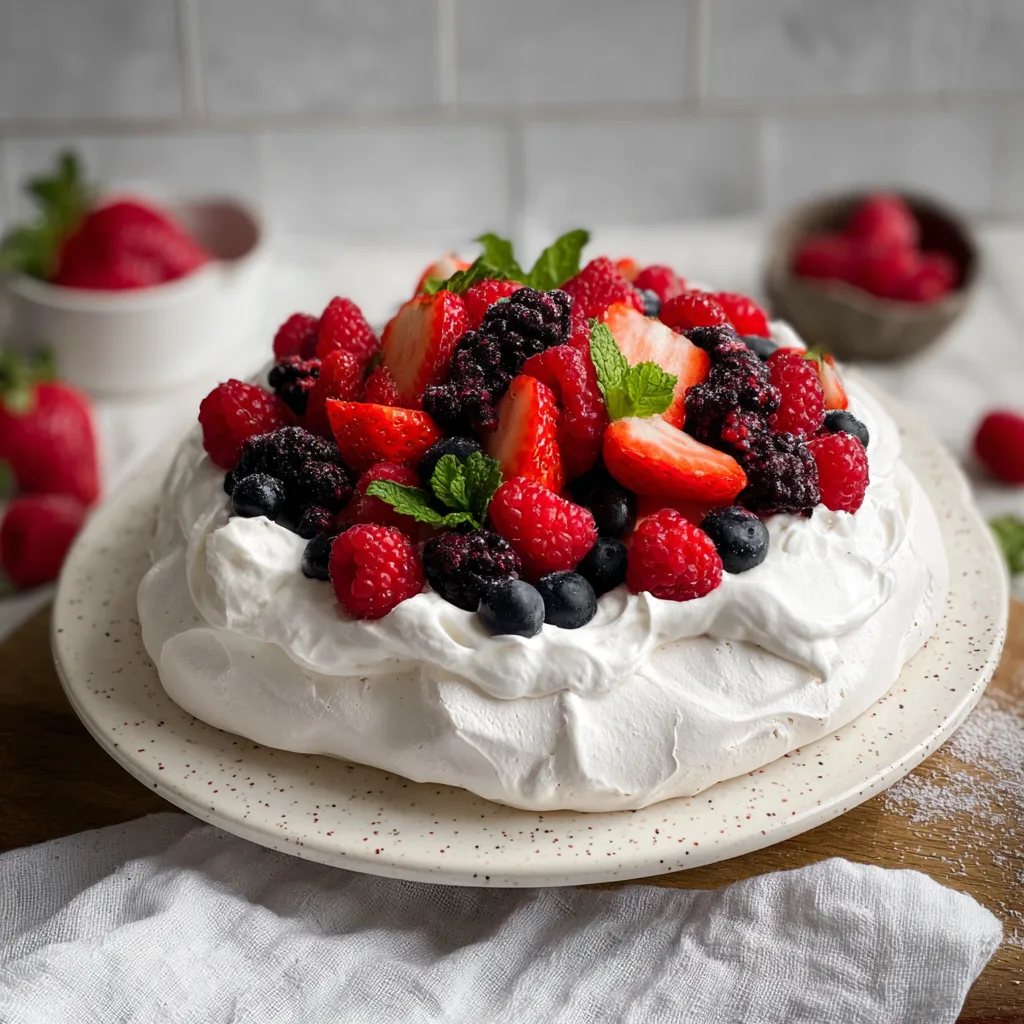
Pavlova with Fresh Berries
Ingredients
Method
- Preheat the oven to 220 F (100 C).
- Separate the egg whites from the yolks carefully, ensuring no yolk gets into the whites.
- Add egg whites and a splash of lemon juice to a completely clean stand mixer bowl fitted with the whisk attachment.
- Whip the egg whites until frothy.
- Add vanilla extract and slowly add the granulated sugar one tablespoon at a time while mixing.
- Scrape down the sides of the bowl occasionally while whisking.
- Continue whisking until stiff peaks form.
- Line a baking sheet with parchment paper and place a little meringue under each corner to hold the paper in place.
- Shape the meringue into an 8–9 inch circle with slightly raised edges and a well in the center.
- Swirl a palette knife along the edges to create a wavy pattern if desired.
- Bake the pavlova on the center rack for 90 minutes.
- Turn off the oven and let the pavlova cool inside for at least 1 hour, preferably 2 hours.
- Crack open the oven door and allow the pavlova to cool for another 30 minutes to 1 hour.
- Wash the berries and quarter or halve the strawberries.
- Combine raspberries, blackberries, strawberries, sugar, and lemon juice in a mixing bowl.
- Let the berry mixture sit while preparing the whipped cream.
- Add heavy whipping cream, optional sugar, and vanilla extract to a mixing bowl.
- Whisk until soft peaks form.
- Transfer the cooled pavlova to a serving plate.
- Spoon whipped cream into the center well of the pavlova.
- Top with the berry mixture.
- Garnish with mint leaves if desired and serve immediately.