Big, bold comfort comes together in every spoonful of this hearty Kushari. Tender rice, lentils, pasta, rich tomato sauce, and crispy fried shallots stack up into the kind of meal that turns an ordinary evening into something worth gathering around the table for. Whether it’s your first time making this beloved dish or it already feels like home, every layer brings a little extra joy to the table.
Why You’ll Love This Kushari (Rice, Lentils, and Pasta with Tomato Sauce)
- Layered Comfort: Every bite brings together rice, lentils, pasta, tangy sauces, and crispy shallots for a meal that feels rich and satisfying.
- Built for Sharing: Served on one big platter with toppings scattered over the top, this dish naturally turns dinner into a family-style gathering.
- Crispy Shallot Magic: The fried shallots add crunch and deep flavor, while the infused oil carries that goodness through the entire recipe.
- Customizable Heat: The homemade shatta lets everyone decide exactly how spicy they want their bowl.
- Pantry-Friendly Ingredients: Rice, lentils, pasta, tomato passata, and chickpeas come together using ingredients that are easy to keep on hand.
- Wonderful Make-Ahead Components: The sauces and fried shallots can all be prepared ahead, making assembly much easier later on.
- A Bold Meatless Dinner: Between the lentils, chickpeas, rice, and pasta, this dish feels hearty enough to stand proudly on its own.
Ingredients You’ll Need
Kushari is one of those glorious layered meals where every single component brings something important to the party. From the deeply flavored shallot oil to the bright tomato sauce and punchy garlic vinegar drizzle, each piece works together to build a bold, satisfying bowl that easily earns a place beside your favorite mediterranean dinner recipes.
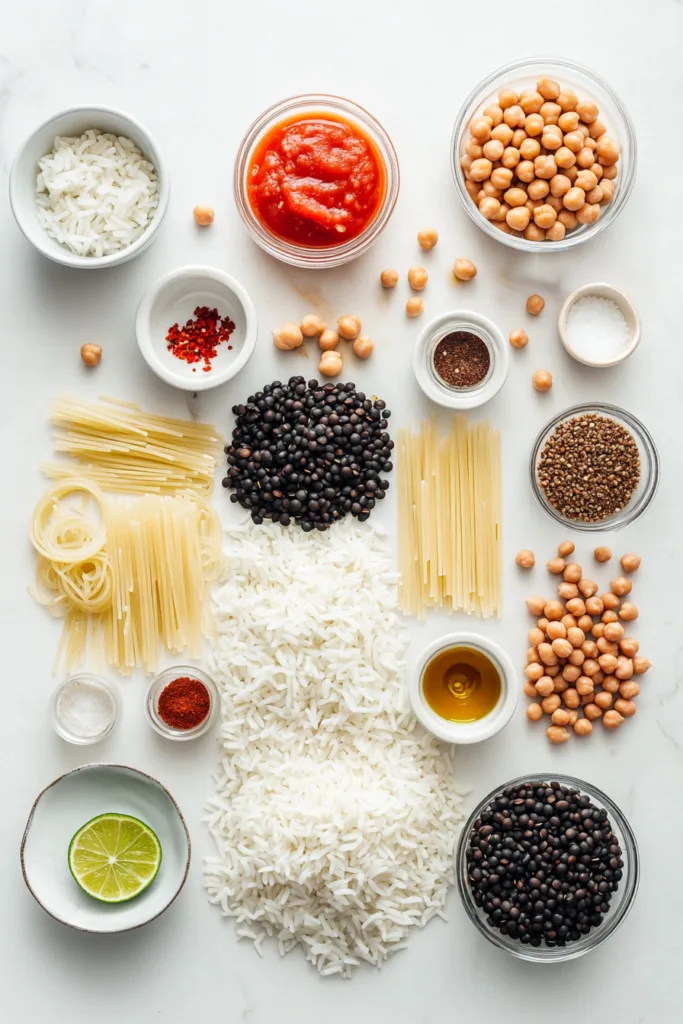
The ingredient list may look long at first glance, but don’t let that scare you off one bit. Most of the ingredients repeat throughout the recipe, and each sauce comes together with simple pantry staples that build incredible flavor.
- Neutral frying oil: This oil is used to fry the shallots until crisp while also becoming infused with their savory flavor. A neutral oil like canola keeps the flavor balanced and allows the shallots to shine.
- Shallots: Thinly sliced shallots become crispy and golden during frying, adding crunch and rich flavor to the final dish. Their flavor also carries into the infused oil used throughout the recipe.
- Kosher salt: Salt seasons every layer of the dish and helps balance the acidity in the sauces while bringing out the savory flavors.
- Garlic: Garlic appears in both the salsa and da’ah, adding sharpness and depth. Minced garlic blends smoothly into the sauces and gives them their signature punch.
- Distilled white vinegar: Vinegar brings brightness and tang to both the tomato sauce and the garlic sauce. It cuts through the richness of the rice and lentils beautifully.
- Tomato passata: Passata creates a smooth, rich tomato sauce with enough body to coat the koshari without feeling heavy.
- Tomato paste: Tomato paste deepens the tomato flavor in both the salsa and shatta while helping create a thicker texture.
- Granulated sugar: A small amount of sugar balances the acidity of the tomatoes and vinegar without making the sauce sweet.
- Ground cumin: Cumin runs through nearly every layer of this recipe, bringing warm, earthy flavor that ties the sauces, lentils, and rice together.
- Ground coriander: Coriander adds a citrusy warmth that softens and rounds out the spices in the koshari.
- Freshly ground black pepper: Black pepper adds gentle heat and seasoning throughout the dish.
- Room temperature water: Water helps mellow the da’ah and creates the right consistency for drizzling over the finished dish.
- Lime juice: Lime juice brightens the da’ah with fresh acidity that balances the richness of the shallot oil.
- Red pepper flakes: These bring heat to the shatta and create a spicy contrast against the mild tomato sauce.
- White basmati rice: The rice creates the foundation of the koshari. Soaking and rinsing it helps the grains cook evenly and stay light instead of sticky.
- Italian vermicelli pasta: Vermicelli is toasted in shallot oil until deep amber in color, adding nutty flavor and texture to the rice mixture.
- Black lentils: Lentils add hearty texture and make the dish feel substantial and filling. Soaking them beforehand helps them cook evenly alongside the rice.
- Elbow pasta: Elbow pasta adds another layer of texture and gives the dish its signature mix of grains and pasta.
- Boiling water: Freshly boiled water helps the rice, lentils, and pasta cook evenly together in the pot.
- Chickpeas: Chickpeas add extra heartiness and a creamy bite when scattered over the finished koshari.
- Da’ah: This garlic-vinegar sauce brings brightness and sharp flavor that cuts through the richness of the rice and pasta.
- Salsa: The mild tomato sauce ties the whole dish together with savory tomato flavor and warm spices.
- Fried shallots: Crispy shallots finish the dish with crunch, savory sweetness, and tons of texture.
- Shatta: The spicy chile-garlic sauce adds heat and richness for anyone who wants a bolder bite.
One of my favorite things about this Kushari is how every layer feels exciting on its own, but once they all come together, the whole platter turns into something downright unforgettable. That mix of crunchy shallots, tangy sauces, tender rice, pasta, and lentils is the kind of comfort food that keeps folks coming back for another scoop before they’ve even finished the first one.
How to Make Kushari (Rice, Lentils, and Pasta with Tomato Sauce)
This recipe comes together in layers, and that’s exactly what makes it so much fun to cook. Every pot and pan builds another piece of flavor, and by the time everything hits the serving dish together, you’ve got a meal that feels bold, comforting, and completely worth the little extra love.
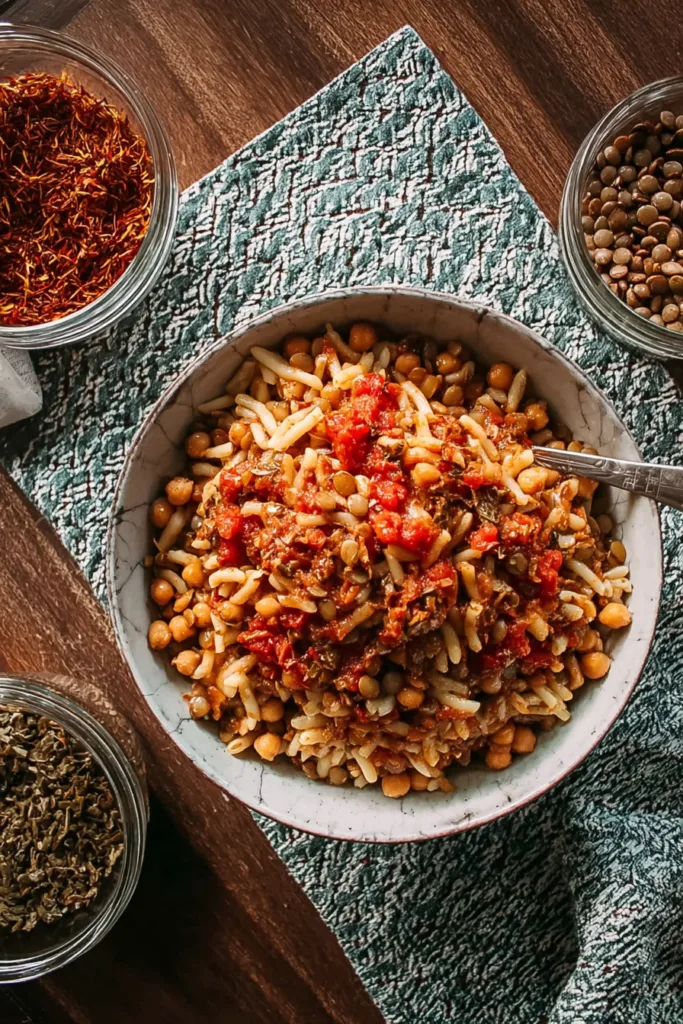
- Cook the shallots in neutral oil over medium heat until golden brown and crisp, stirring often as they fry. Strain the shallots through a fine-mesh strainer, then transfer them to a paper towel-lined plate and season with salt. Set the shallot-infused oil aside to cool.
- Prepare the salsa by heating shallot-infused oil in a saucepan over medium-low heat. Add the garlic and cook while stirring constantly, then whisk in the vinegar, tomato passata, tomato paste, sugar, cumin, and coriander. Simmer the sauce until slightly thickened, then reserve a portion for the shatta.
- Make the da’ah in a small saucepan by heating shallot-infused oil and cooking the garlic briefly. Whisk in the vinegar, water, lime juice, and cumin, then season with salt and pepper before setting the sauce aside.
- Build the shatta in the cleaned saucepan by heating shallot-infused oil and stirring in the red pepper flakes. Add the garlic, then stir in the tomato paste, reserved salsa, and cumin. Simmer until slightly thickened and season with salt.
- Toast the vermicelli in shallot oil in a heavy-bottom pot until deep amber in color. Add the rice and elbow pasta, stirring until coated in oil, then mix in the soaked lentils. Pour in the boiling water, season with cumin, coriander, salt, and pepper, and cook until the water is absorbed. Cover the pot and continue cooking until the rice and lentils are tender, then fluff with a fork.
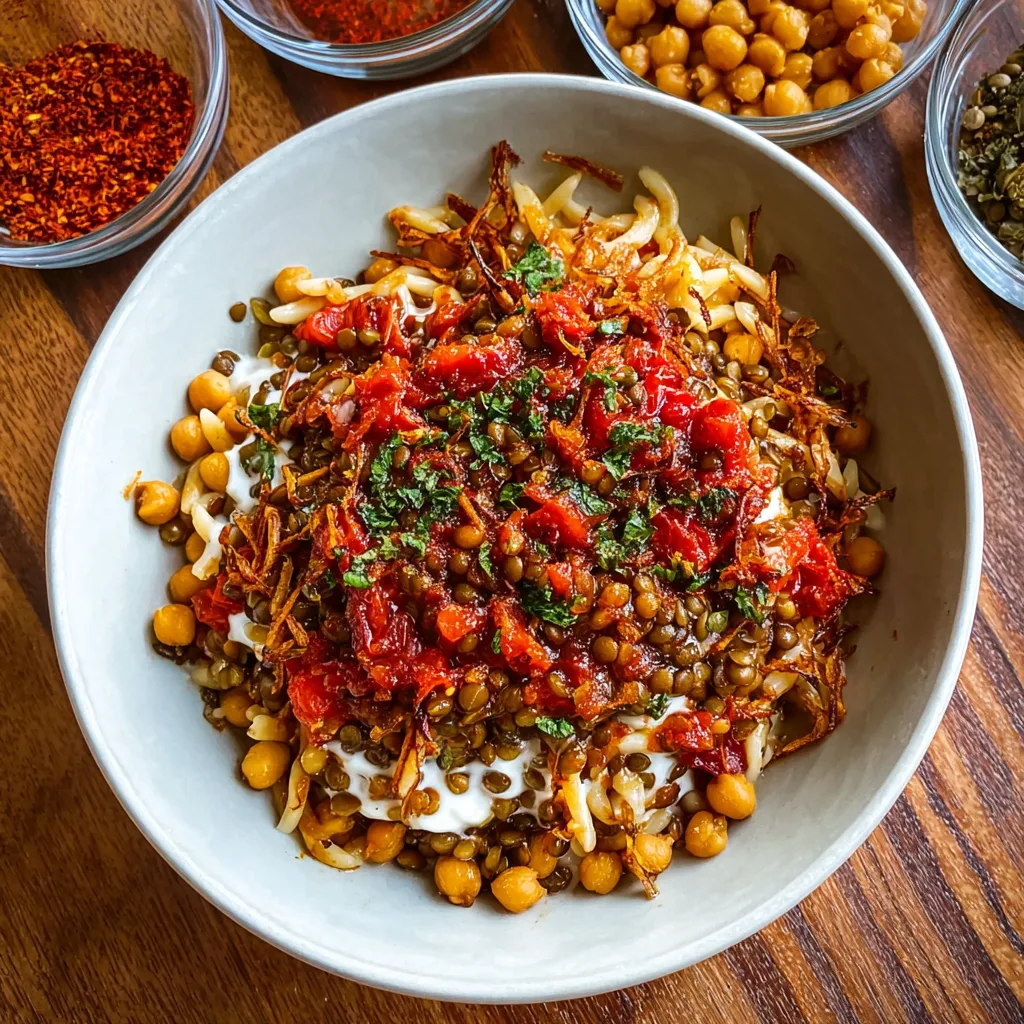
- Assemble the koshari on a large serving dish. Drizzle with da’ah and salsa, then top with chickpeas and crispy fried shallots. Serve warm with extra salsa and shatta on the side.
Tips for the Best Kushari (Rice, Lentils, and Pasta with Tomato Sauce)
- Slice the Shallots Thinly — Thin slices cook more evenly and turn crisp without leaving some pieces undercooked while others brown too quickly.
- Watch the Vermicelli Carefully — The vermicelli should reach a deep amber color before adding the rice and pasta, since this step adds a rich toasted flavor to the dish.
- Rinse the Rice Well — Thoroughly rinsing the soaked basmati rice helps keep the grains light and separate once cooked.
- Reserve the Salsa Early — Pulling out the portion needed for the shatta before assembling keeps the sauce proportions balanced and saves time later.
- Adjust the Da’ah if Needed — If the garlic-vinegar sauce tastes too acidic, add a little more water to soften the sharpness without losing flavor.
- Serve with the Sauces on the Side — Keeping extra salsa and shatta nearby lets everyone customize their own bowl, which makes this one of those fun mediterranean meal prep dishes that never feels boring.
Storage & Make-Ahead Tips
Fridge: Store the sauces in airtight containers in the refrigerator for up to 3 days. The assembled koshari can also be refrigerated in an airtight container for 3 to 4 days. Keep the fried shallots separate when possible so they stay crisp longer.
Freezer: The koshari can be frozen in an airtight container or zip-top bag for up to 1 month. Thaw in the refrigerator before reheating for the best texture.
Make-Ahead: The fried shallots can be prepared 1 day ahead and stored in an airtight container at room temperature. The sauces can also be made ahead, making final assembly much easier when you’re ready to serve.
What to Serve With Kushari (Rice, Lentils, and Pasta with Tomato Sauce)
Kushari is already a hearty, layered meal all on its own, but a few simple sides can round out the table beautifully. Since the dish has bold savory flavors and rich sauces, lighter sides work especially well alongside it.
- Simple green salad with crisp lettuce and fresh vegetables
- Warm flatbread for scooping up extra salsa and da’ah
- Sliced cucumbers and tomatoes for a cool, refreshing contrast
- Roasted vegetables with simple seasoning
- Fresh citrus wedges for an extra bright finish at the table
- Plain yogurt served alongside for a cool and creamy contrast
Frequently Asked Questions
Q: What makes Kushari different from other rice dishes?
Kushari stands out because it combines several hearty ingredients into one layered dish. Instead of using only rice or only pasta, this recipe includes rice, vermicelli, elbow pasta, lentils, chickpeas, multiple sauces, and crispy fried shallots. Each component adds its own texture and flavor, which creates a bowl that feels rich, filling, and full of contrast.
Q: Why do I need to soak the rice and lentils?
The basmati rice is soaked and rinsed to help the grains cook more evenly and stay fluffy instead of sticky. The black lentils are soaked in hot water so they soften enough to cook alongside the rice and pasta in the same pot. Since everything cooks together toward the end, soaking helps all the textures finish properly at the same time.
Q: Can I use store-bought chile garlic sauce instead of homemade shatta?
Yes. The recipe notes mention that sriracha or a store-bought chile garlic sauce can be substituted for the homemade shatta. The homemade version gives you control over the heat and consistency, but using a prepared sauce is a helpful shortcut if you want to simplify the process a bit.
Q: Why is the vermicelli toasted before cooking?
Toasting the vermicelli in shallot oil adds deeper flavor to the entire dish. Cooking it until it reaches a deep amber color creates a nuttier taste that blends beautifully with the cumin, coriander, rice, and lentils. It also gives the finished koshari more texture and complexity.
Q: Can I make the sauces ahead of time?
Absolutely. The salsa and da’ah can both be refrigerated in airtight containers for up to 3 days. Making the sauces ahead can break the recipe into smaller steps and make assembly much easier later on. The fried shallots can also be prepared ahead and stored separately.
Q: How spicy is the shatta?
The shatta has noticeable heat from the red pepper flakes, but the spice level can still be adjusted when serving since it’s added at the table. The recipe describes the texture as slightly thicker than hot sauce, similar to sriracha, so it works more like a flavorful finishing sauce rather than overpowering the whole dish.
Q: What’s the best way to reheat Kushari?
You can reheat koshari in the oven by covering it tightly with foil and warming it at 350ºF until heated through. It can also be reheated in the microwave in a microwave-safe container until warm. Adding the sauces after reheating helps keep the flavors fresh and balanced.
Q: Is Kushari good for mediterranean dinner recipes during busy weeks?
It works wonderfully for busy evenings because many of the components can be prepared ahead. The sauces, fried shallots, and even the cooked koshari store well, so you can assemble bowls quickly throughout the week. Since the toppings are served separately, everyone can build their own perfect plate.
Kushari has a way of turning a regular dinner into something lively and memorable, with everybody reaching across the table for another spoonful of sauce or one more handful of crispy shallots. It’s hearty, bold, comforting, and full of the kind of homemade character that makes cooking feel personal and joyful.
Kushari (Rice, Lentils, and Pasta with Tomato Sauce)
Ingredients
Method
- Combine oil and shallots in a 10-inch skillet over medium heat and cook, stirring often, until shallots are golden brown and crisp.
- Strain shallots through a fine-mesh strainer into a heatproof bowl.
- Transfer fried shallots to a paper towel-lined plate and season with salt.
- Set shallot-infused oil aside to cool.
- Heat shallot-infused oil in a medium saucepan over medium-low heat.
- Add garlic and cook while stirring constantly until golden brown.
- Whisk in vinegar, tomato passata, tomato paste, sugar, cumin, and coriander.
- Simmer salsa until slightly thickened and reserve 1/4 cup for the shatta.
- Heat shallot-infused oil in a small saucepan over medium-low heat.
- Add garlic and cook while stirring constantly until fragrant.
- Whisk in vinegar, water, lime juice, and cumin.
- Season da’ah with salt and pepper and set aside.
- Heat shallot-infused oil in the cleaned saucepan over medium-low heat.
- Add red pepper flakes and stir constantly until fragrant.
- Add garlic and cook while stirring constantly until fragrant.
- Stir in tomato paste, reserved salsa, and cumin.
- Simmer shatta until slightly thickened and season with salt.
- Bring 2 cups water to a boil in a small saucepan or kettle.
- Heat shallot oil in a heavy-bottom pot over medium-low heat.
- Add vermicelli and stir until deep amber in color.
- Add rice and elbow pasta and stir until evenly coated in oil.
- Stir in soaked black lentils.
- Pour in freshly boiled water until ingredients are covered.
- Add cumin, coriander, salt, and pepper and bring to a boil.
- Cook until water is absorbed.
- Cover pot and cook until rice and lentils are tender.
- Let koshari rest off heat, then fluff with a fork and season with salt to taste.
- Transfer koshari to a serving dish.
- Drizzle with da’ah and salsa.
- Top with chickpeas and fried shallots.
- Serve warm with remaining sauce and shatta on the side.